Cycling stories
Ten of the hardest climbs in Tour history
From the Italian border to the high roads above Méribel: ten demanding Tour ascents, ranked by length and gradient, with stories from the men’s and women’s races.
By Montivelo · · 11 min read
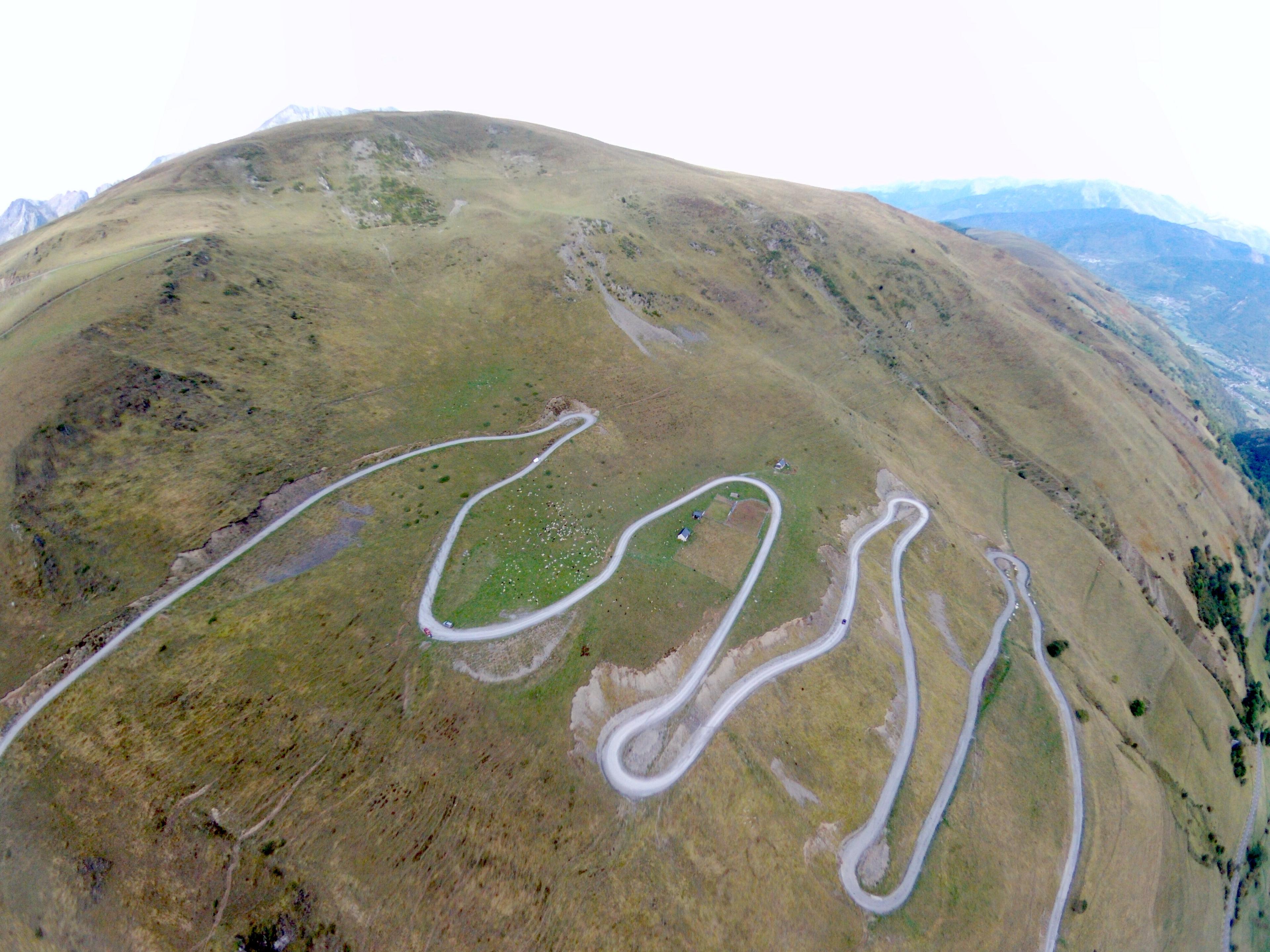
Upper hairpins on the Col du Portet. Cropped for display. Photo by Teddy65170 on Wikimedia Commons · CC BY-SA 4.0

The climbs across France and Italy
A mountain can dominate the Tour without being its hardest climb. Familiarity counts: the bend where an attack began, the name painted on the road, the summit that appears again each July. Physical difficulty asks a different question. Take away the crowds and the racing memory, and what does the road itself demand?
This countdown takes ten of the hardest approaches from a researched shortlist and ranks them by length multiplied by average gradient squared. The gradient is entered as a percentage number, so a climb of 10 kilometres at 8 per cent scores 640. The figures belong to named race approaches, with one entry per mountain; separately classified climbs are kept separate. The score rewards sustained steepness and distance. It cannot describe altitude, changing gradients, wind, heat or the effort already spent before the foot of the climb.
Our scope includes the men’s Tour, the 1984–1989 Tour de France Féminin and the Tour de France Femmes from 2022, through the completed 2026 races. Historical measurements are incomplete, so this is a ranking of the verified approaches in our shortlist, rather than an exhaustive all-time table. The fixed race figures beneath each heading determine the order; the catalogue figures and profiles alongside the photographs describe the linked ride. Specific differences are noted where they matter. Map markers show stored catalogue starts, where available.
The result leaves room for unfamiliar roads and for a climb approached from Italy. It also brings the men’s and women’s races into the same landscape: a pass remembers more than one peloton, and the difficult side is not always the side that the most familiar story follows.
10. Val Thorens
Moûtiers, RA
Difficulty score 1,010.32019 men’s Tour · Classified climb above the Moûtiers valley · 33.4 km at 5.5%
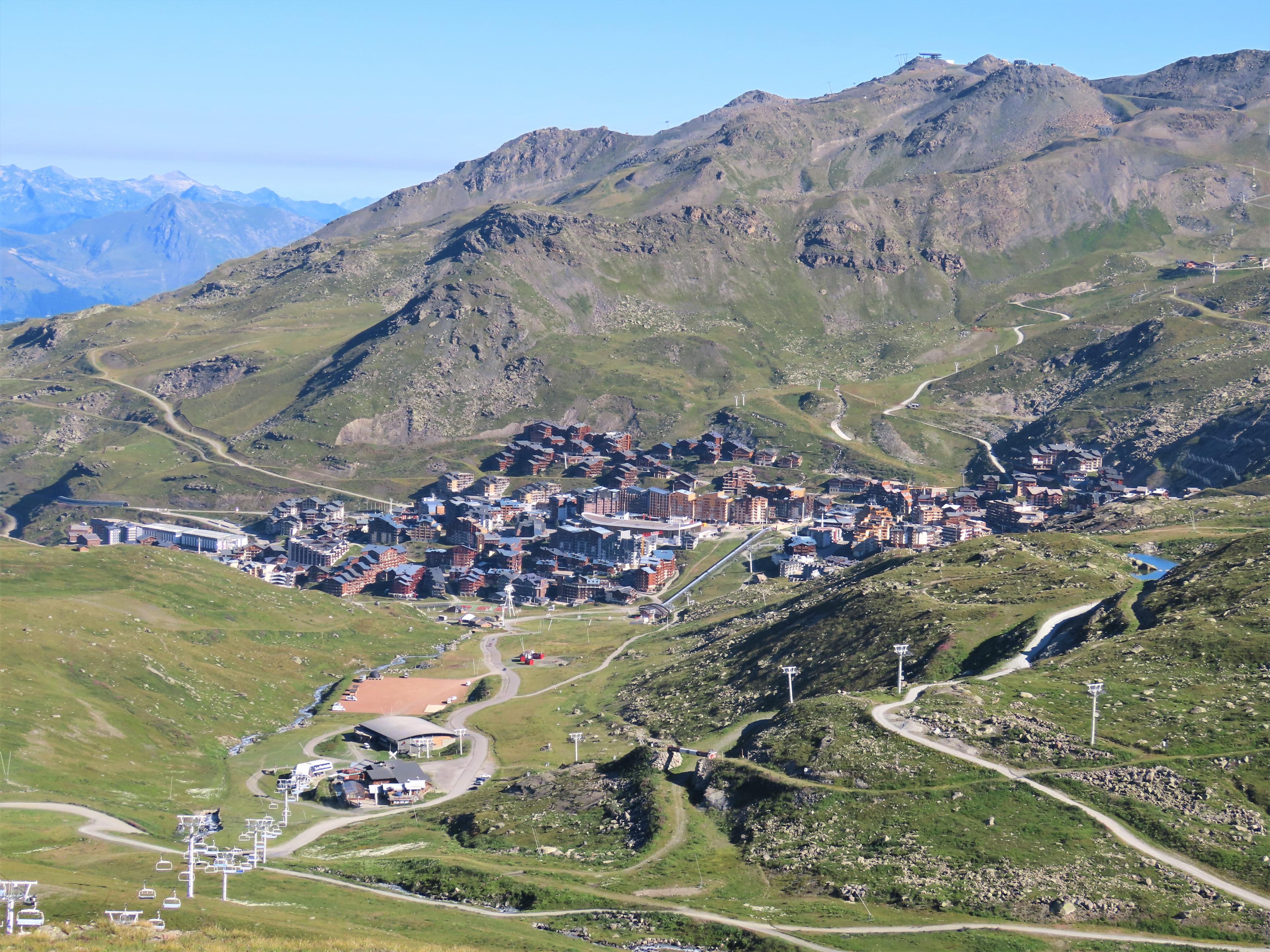

Val Thorens makes a different argument for difficulty. The road from the Moûtiers valley towards the high ski resort is long enough to contain several changes of rhythm. Its average conceals easier ground as well as steeper stretches, and the profile includes descent. The score counts it as the single classified ascent used by the Tour, without pretending that every metre points uphill.
In 2019, the Tour reached Val Thorens after weather had forced the penultimate stage to be shortened. Vincenzo Nibali won from the breakaway, while Egan Bernal retained yellow. Julian Alaphilippe lost his place on the provisional podium. A curtailed day still changed the order behind the leader: the final climb had enough road left to separate riders whose Tours had taken very different shapes.
There is something distinctive about finishing at a ski resort. The destination is an inhabited place built high above the valley, with roads and buildings where another ascent might end at a bare pass. Val Thorens belongs to that world. Its difficulty grows through duration and the repeated return to climbing, with the lower valley becoming a distant starting point before the resort is finally reached.
9. Col du Glandon
Saint-Etienne-de-Cuines, Auvergne-Rhône-Alpes
Difficulty score 1,021.22024 women’s Tour · Maurienne / Villards valley, northern side · 19.7 km at 7.2%
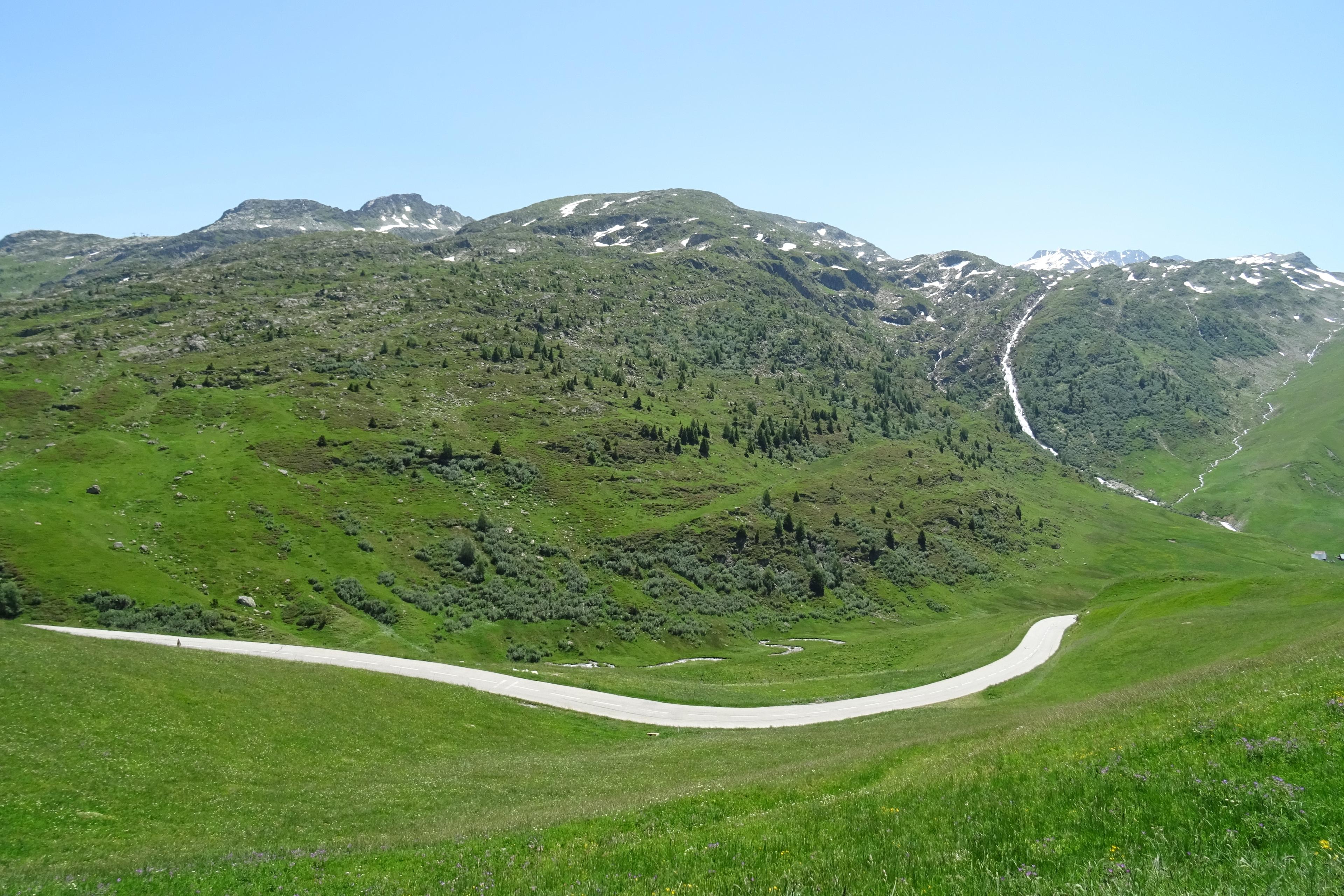
The northern Glandon climbs out of the Maurienne through the Villards valley. Saint-Colomban-des-Villards lies along the way, before the upper road turns towards the pass. There is a marked change of setting between the settled valley and the open slopes near the crossing. The final bends give the ascent its most concentrated expression: a road working hard to escape the valley below.
This was an important road in the final stage of the 2024 Tour de France Femmes. Demi Vollering attacked on the Glandon, taking Pauliena Rooijakkers with her and distancing yellow jersey Kasia Niewiadoma. Vollering went on to win at Alpe d’Huez, but Niewiadoma kept the overall victory by four seconds. The last climb settled the result; the Glandon had opened the chase that made those seconds matter.
It is tempting to give every pass a single role in a famous day. The Glandon resists that tidiness. It can be an ascent in its own right, a crossing into the Oisans, or the beginning of a much longer reckoning. Here it is ranked on its northern approach alone, without borrowing the road onwards to Croix-de-Fer or the effort of any later climb.
8. Col de la Lombarde
Vinadio, Piemonte
Difficulty score 1,023.62008 men’s Tour · Vinadio, Italian side · 21.5 km at 6.9%

Lombarde brings the Tour across another border. The ranked approach comes from the Vinadio side in Italy, climbing towards the pass before the road drops into France above Isola 2000. Its Italian name, Colle della Lombarda, is useful when following the road from below. The name changes at the crossing; the ascent remains one continuous geographical problem.
In 2008, the Tour used this side on its stage from Cuneo to Jausiers. The Lombarde came before the southern ascent of the Bonette, putting two high passes into a day that ended with a long descent. Cyril Dessel won the stage in Jausiers. His victory belongs to the whole route, rather than to a summit finish on the first mountain.
Lombarde’s place above the Glandon is narrow, and should be treated accordingly. A small difference in published gradient can move two roads this close together. What the score establishes more securely is their shared scale: long ascents with enough sustained gradient to sit among the most demanding approaches in this selection. The Italian side earns its place through the climb itself, rather than through frequency of Tour visits.
7. Col du Tourmalet
Luz Saint Sauveur, Midi-Pyrénées
Difficulty score 1,040.42024 men’s Tour · Luz-Saint-Sauveur, western side · 19.0 km at 7.4%
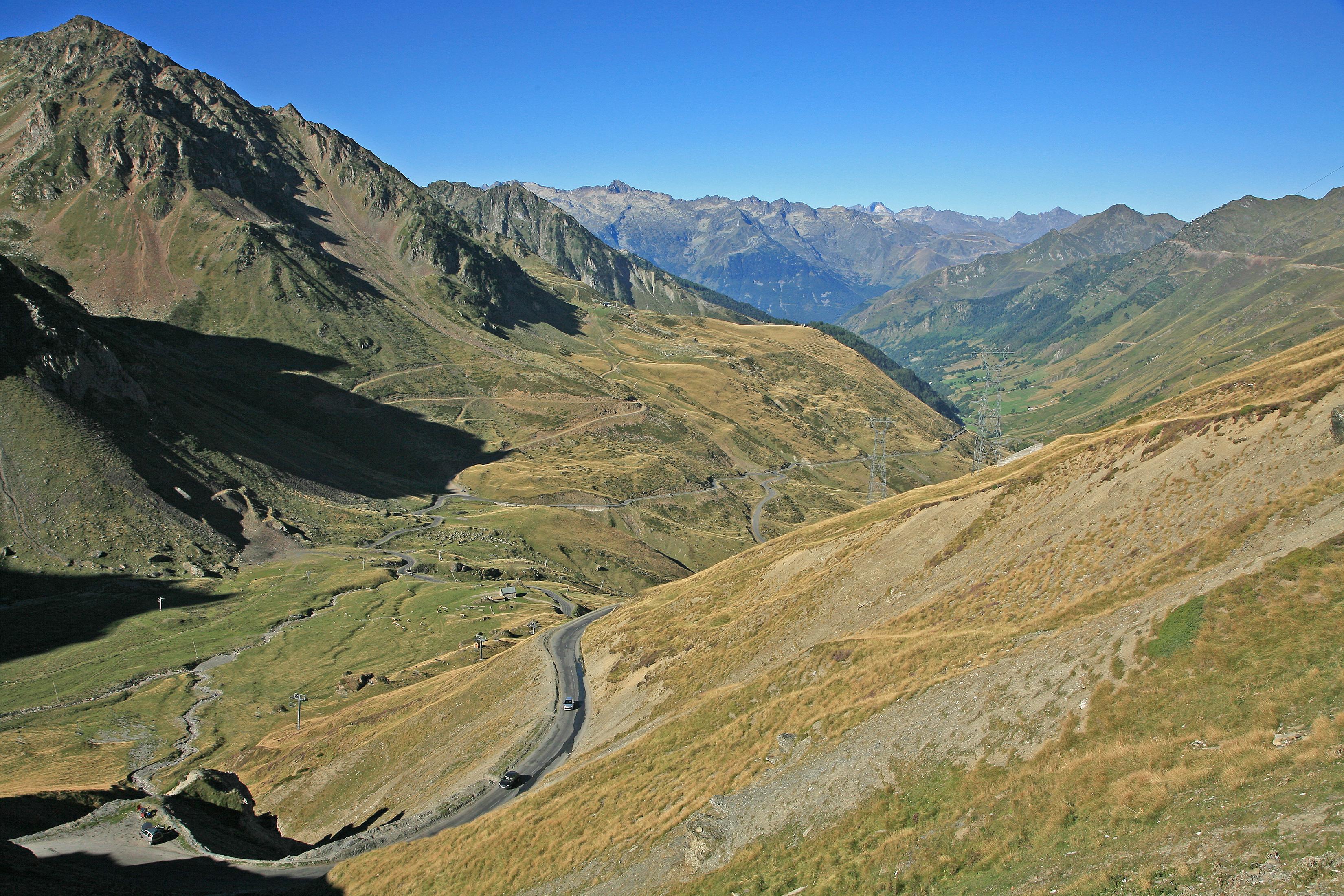

From Luz-Saint-Sauveur, the western Tourmalet climbs through Barèges towards increasingly open ground. The valley narrows the view before the upper slopes release it. This is the longer of the two familiar approaches from the villages at either foot of the pass, and it is the western ascent that supplies the figures for this countdown.
Thibaut Pinot won here in 2019, at the summit finish of stage fourteen. Julian Alaphilippe finished second in yellow, ahead of Steven Kruijswijk and the other contenders. The scene belonged to that particular afternoon: a French stage winner and a French race leader arriving at a pass whose history could easily have overwhelmed the present. Instead, the racing gave it another episode worth remembering.
The Tourmalet’s reputation does not need the score’s assistance. What the calculation offers is a way of seeing the western road alongside less familiar ascents. Its length holds it high in the list even without a bonus for its name, altitude or history. The eastern approach through La Mongie is another ride, with another profile; the two should not be folded into a single set of figures simply because they share a summit.
6. Col de la Croix-de-Fer
Vaujany, Auvergne-Rhône-Alpes
Difficulty score 1,066.52012 men’s Tour · Saint-Étienne-de-Cuines via Glandon, northern side · 22.4 km at 6.9%
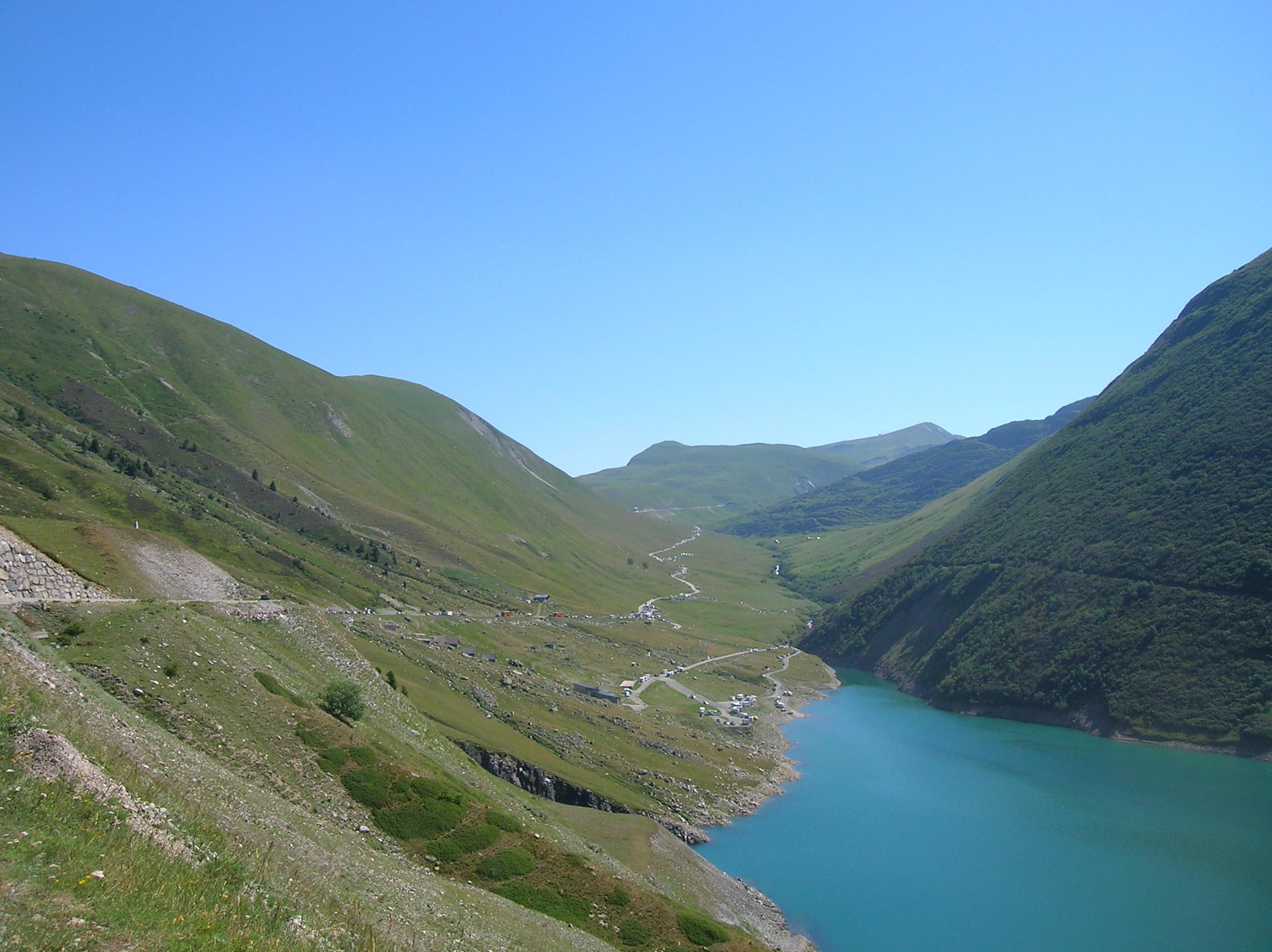

Croix-de-Fer can be reached by several roads, and its name alone says too little about the effort involved. This entry follows the northern approach from Saint-Étienne-de-Cuines, climbing the Villards valley towards Glandon before continuing to Croix-de-Fer. The additional road changes the destination and the total climb. In the 2012 Tour, the whole approach was classified as a single hors catégorie ascent.
That day, on the stage to La Toussuire, Cadel Evans attacked with the help of teammate Tejay van Garderen. Their advantage was brief: the yellow jersey group brought them back before the pass. Further ahead, Pierre Rolland crossed Croix-de-Fer first. He went on to win the stage, whose remaining climbs included the Mollard and the final road to La Toussuire. The pass supplied an early confrontation in a day whose result was settled later.
This ascent shares much of its road with the northern Glandon, which also appears in the countdown. They are counted as distinct named passes, with their overlapping route made explicit. The catalogue link takes you to the western approach from the Vaujany side instead. That road reaches the same pass by another route; its profile and live figures do not supply the score shown above.
5. Cime de la Bonette
Jausiers, Provence-Alpes-Côte d'Azur
Difficulty score 1,090.32024 men’s Tour · Jausiers, including the Cime road loop · 22.9 km at 6.9%
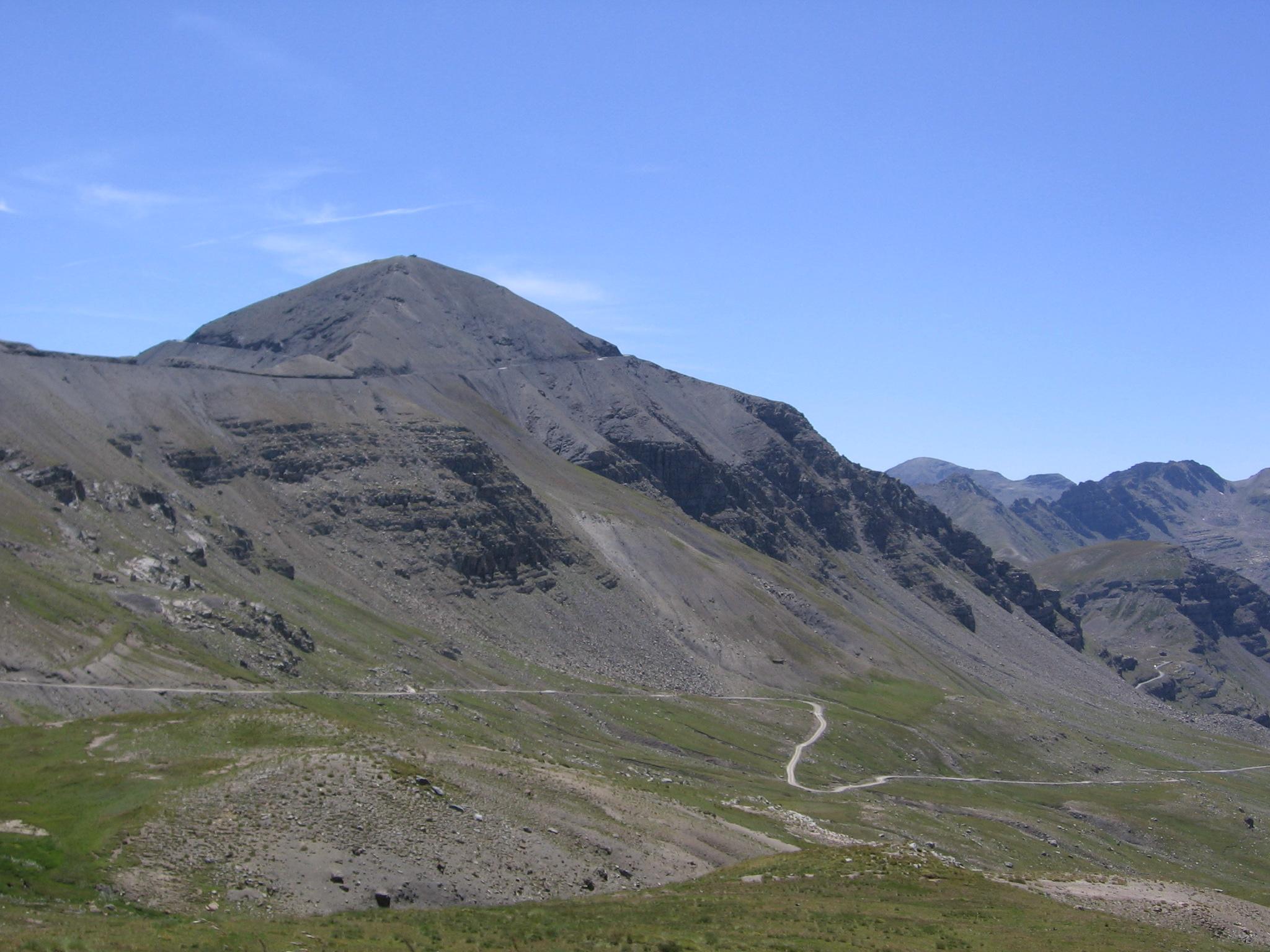

Above Jausiers, the Bonette climbs from the Ubaye into a landscape where grass gradually gives way to rock. The road passes the old military buildings at Restefond before reaching the Col de la Bonette. Beyond the pass, the surfaced loop rises around the Cime. Those last bends are part of the ranked ascent: reaching the col alone would leave the final portion unfinished.
The distinction matters because the Tour’s celebrated height belongs to the road loop, at 2,802 metres, rather than to the lower pass or the actual mountain summit. In 2024, the race climbed from Jausiers on its way to Isola 2000. The Bonette was a passage that day, followed by a long descent and another ascent, rather than a finish line perched at the highest road point.
The calculation gives no allowance for that height. It treats the Bonette’s gradient in the same way as a slope much nearer sea level, which is one reason to read the order with care. What the road offers beyond the arithmetic is the scale of the change: a village in the valley, pasture above it, then the spare upper country and a final loop that climbs beyond the natural crossing.
4. Col du Portet
Vignec, Languedoc-Roussillon Midi-Pyrénées
Difficulty score 1,211.02021 men’s Tour · Saint-Lary-Soulan / Vignec · 16.0 km at 8.7%
The Portet shares its opening road with the climb towards Pla d’Adet, then takes its own line above Saint-Lary-Soulan. From the valley, the road climbs through the inhabited lower slopes before turning towards Espiaube and the upper mountain. A short tunnel appears near the top. The destination is the Col du Portet itself, distinct from the ski-station finish on the neighbouring branch.
Nairo Quintana won the Tour’s 2018 stage here, a short mountain day that ended at the newly introduced finish. The race returned in 2021, when Tadej Pogačar won ahead of Jonas Vingegaard and Richard Carapaz. Those are two separate chapters on the same demanding road, and the later visit supplies the fixed measurements used in this ranking.
Portet’s position comes from keeping a steep average over a substantial ascent. There is little need to decorate that with a claim to be the highest road anywhere. The route, the slope and the way the upper road leaves the settled valley are enough.
3. Mont Ventoux
Bédoin, PACA
Difficulty score 1,215.82025 men’s Tour · Saint-Estève, on the Bédoin road · 15.7 km at 8.8%
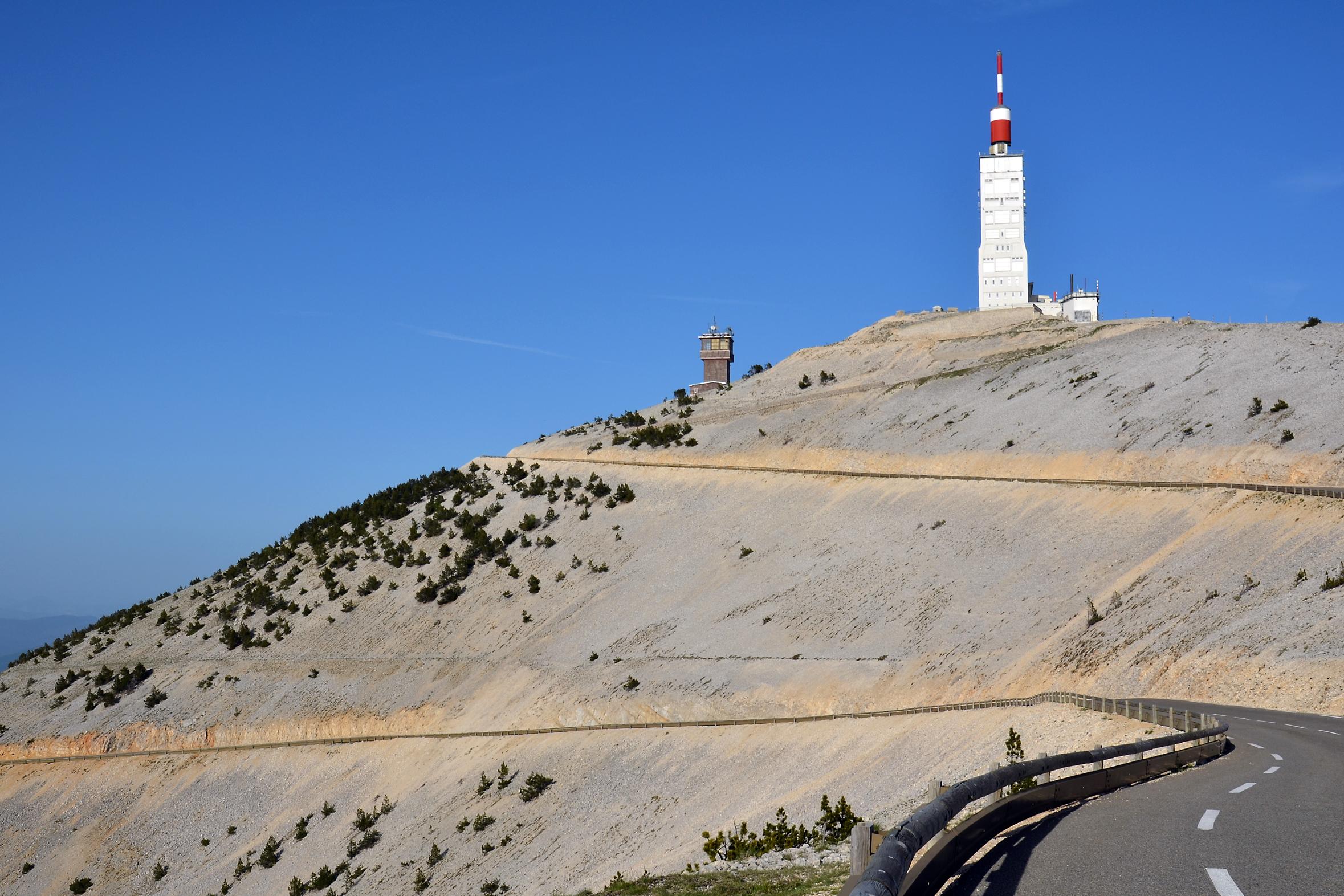

The Ventoux ascent from Bédoin contains a conspicuous change of world. Above Saint-Estève, the road climbs through forest, where the surrounding mountain is largely hidden by trees. At Chalet Reynard, the view opens onto pale limestone and the summit tower. The final road crosses exposed ground that scarcely resembles the lower ascent, although both belong to the same mountain.
For this ranking, the measured climb begins at Saint-Estève, following the classified section used in the 2025 men’s Tour. The gentler road from Bédoin is part of the linked catalogue ride but is outside those ranking figures. This is a useful example of why endpoints matter: including more road does not necessarily produce a higher score when it also reduces the average gradient.
Valentin Paret-Peintre won the 2025 summit finish ahead of Ben Healy. By then, the breakaway’s contest had given the mountain its own race, separate from the fight between the overall contenders behind. Ventoux accommodates both stories. The forest and the exposed upper road ask their questions of everyone, while the summit can hold a stage victory and a general-classification calculation only moments apart.
2. Col de la Madeleine
La Chambre, RA
Difficulty score 1,220.32025 women’s Tour · La Chambre via Montgellafrey · 18.6 km at 8.1%
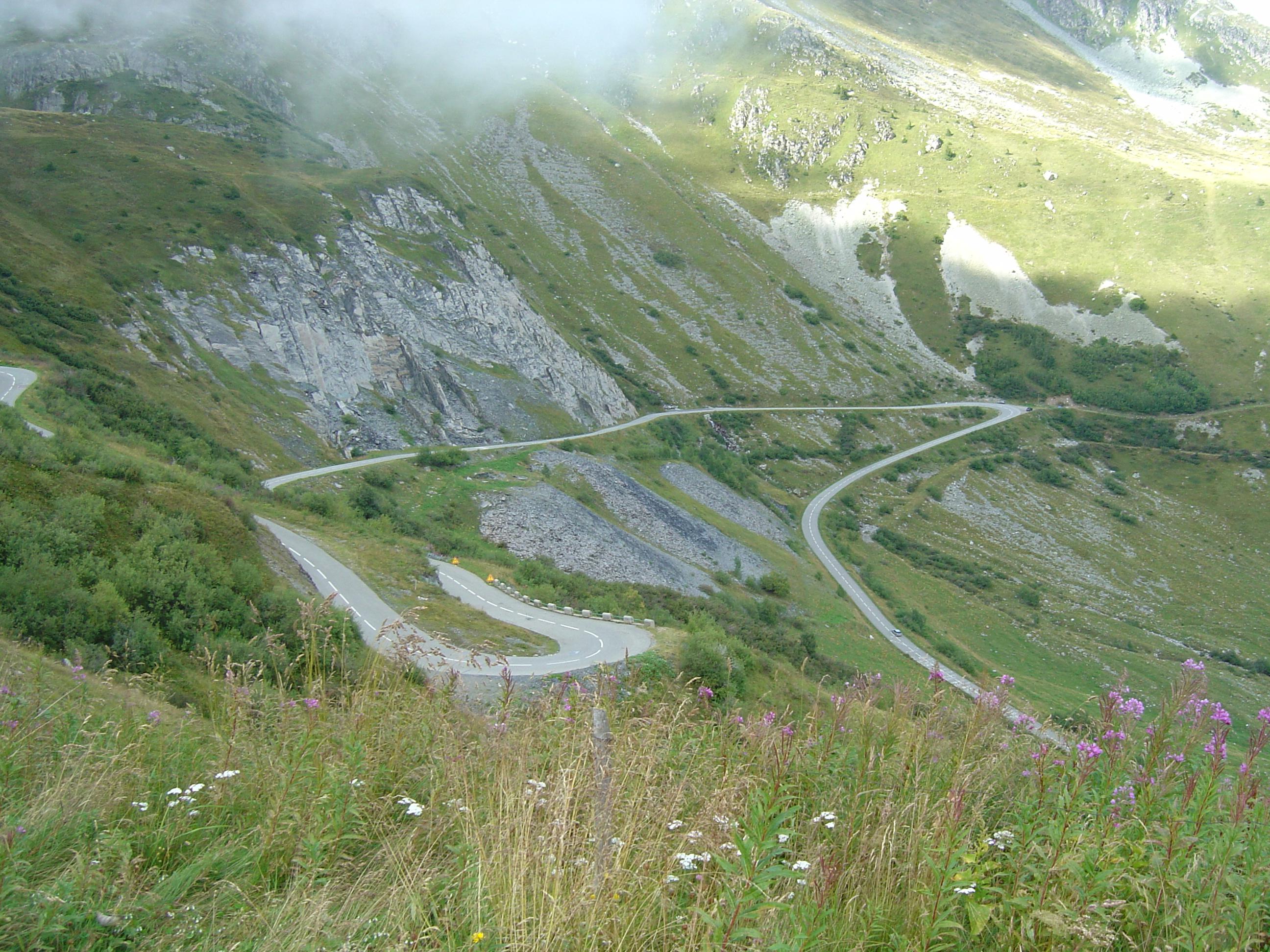

The Madeleine has more than one southern approach. This entry follows the route through Montgellafrey used by the women’s Tour in 2025, climbing from the Maurienne towards Saint-François-Longchamp and the pass. The roads from below eventually meet, but their lower sections are distinct. Giving the ascent its village name helps keep the ranked road separate from other ways of reaching the same col.
Pauline Ferrand-Prévot won that 2025 stage and took the yellow jersey. After riding with Sarah Gigante on the ascent, she attacked with nine kilometres remaining and went on to finish clear. Marion Bunel’s work for her teammate formed part of the move. The mountain gave that edition a decisive afternoon, with the French rider leaving it as the new race leader.
A small lead in this calculation separates the Madeleine from Ventoux and Portet, so the order is sensitive to the published measurements. The broader comparison is more robust: all three combine considerable length with a high average gradient. Madeleine adds the character of a through-road pass, carrying the journey out of the Maurienne towards the Tarentaise. The finish of the effort can also be the beginning of another valley.
1. Col de la Loze
Brides-les-Bains, Auvergne-Rhône-Alpes
Difficulty score 1,308.12020 men’s Tour · Brides-les-Bains via Méribel · 21.5 km at 7.8%


Above Méribel, the Loze leaves the familiar scale of a resort access road. The upper route is narrower, and its changes of gradient interrupt the rhythm established below. This countdown uses the approach through Méribel raced in 2020, rather than the route through Courchevel or the longer combination used in another edition. The same pass can present a substantially different climb.
Miguel Ángel López won the Tour’s first stage finish here in 2020, ahead of Primož Roglič and Tadej Pogačar. The upper slopes gave that day a distinct character. A smooth-looking average could not describe the short steep ramps, the changes of pace they demanded or the distance already climbed from the valley. Even a score designed to reward gradient smooths out much of what makes the road unusual.
Loze leads this verified selection on the simple calculation chosen for it. That leaves room for another rider to find the Bonette’s height or the Portet’s sustained steepness more difficult. Rankings are most useful when they make their terms visible. Here the arithmetic leads to a road whose final kilometres also explain its fascination: a high crossing above the resorts, reached by an ascent that repeatedly changes the shape of the effort before it ends.