Cycling stories
The steepest streets in the world: can you stay on the bike?
Cobbles in Pittsburgh, a sprint through Harlech and a climb-off in a German village. Seven extraordinary streets, the riders who take them on, and what it takes to get up without putting a foot down.
By Montivelo · · 14 min read
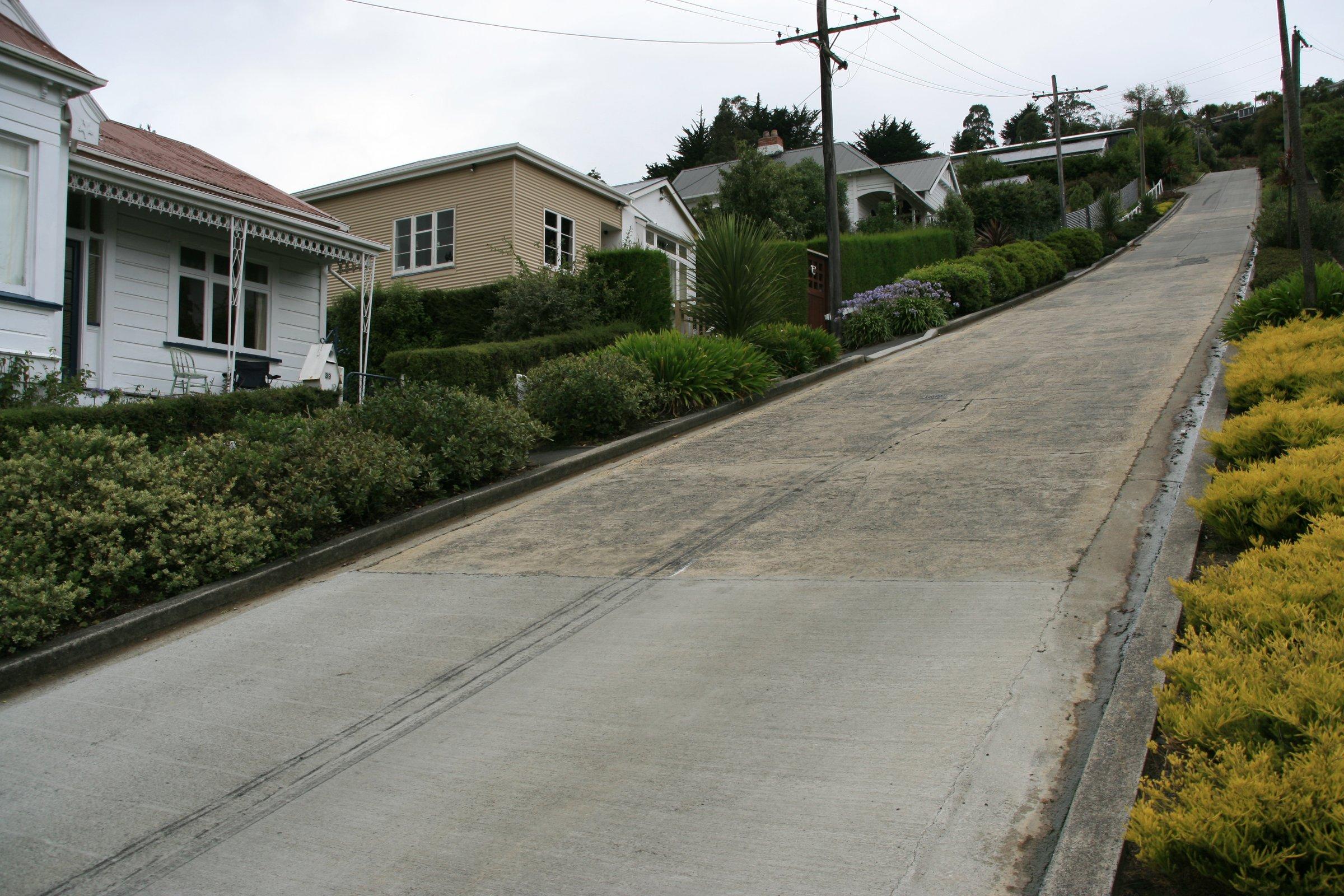
Baldwin Street, Dunedin. Resized and cropped for display. Photo by Mark Oliver Dittrich on Wikimedia Commons · Public domain


The climbs across the world
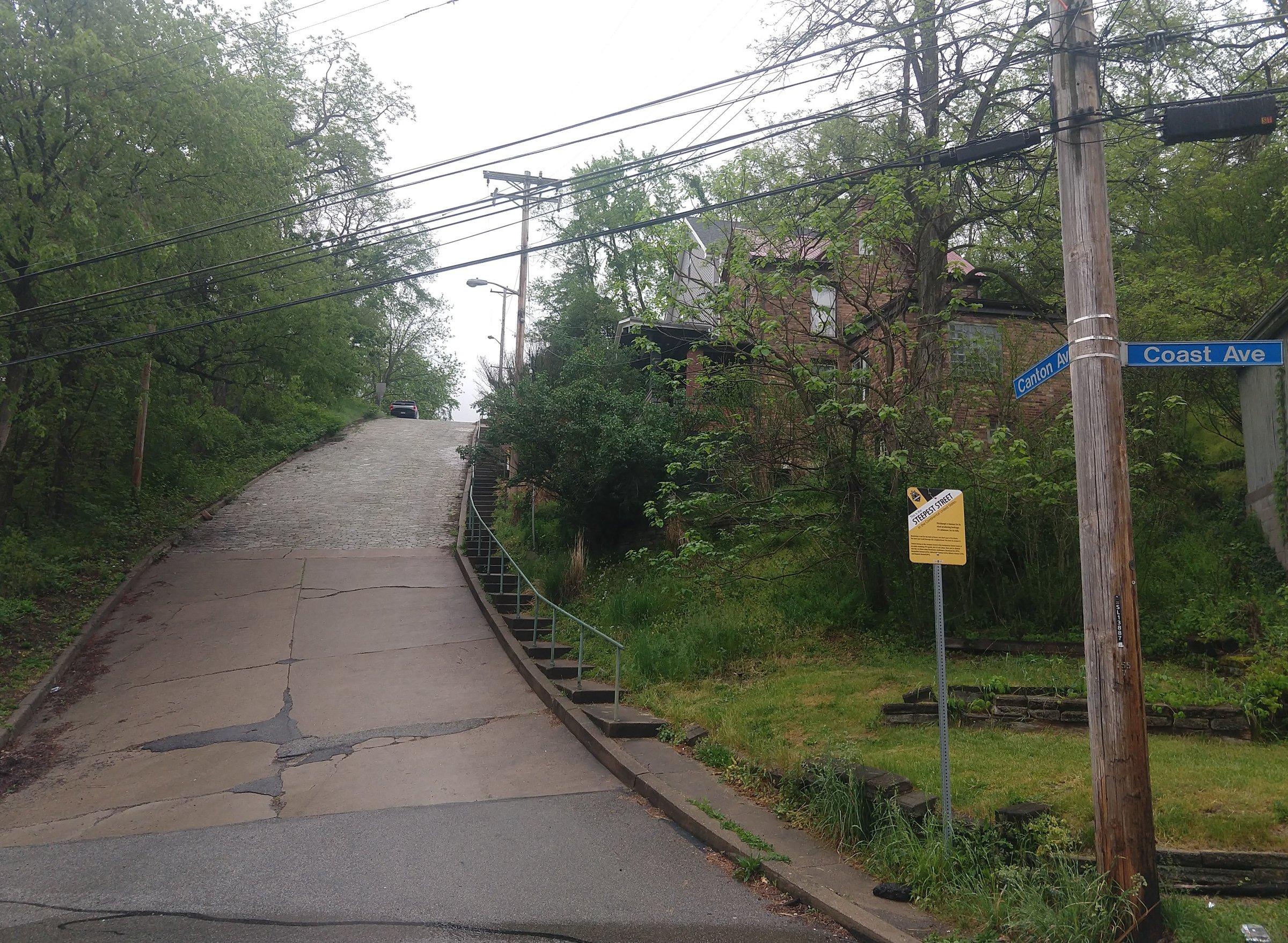
At the bottom of Canton Avenue, the challenge is wonderfully uncomplicated: get to the top without putting a foot down. The road is short, the surface is made of blocks, and the steps beside it offer a pointed reminder that there is an easier way to travel uphill. During Pittsburgh’s Dirty Dozen, riders return to the bottom for another attempt. Clearing the street can be an achievement quite separate from winning anything.
That is the attraction of an exceptionally steep street. You do not need an Alpine pass or a week away to find an effort worth remembering. A few hundred metres between somebody’s front gate and the next junction can ask awkward questions of your legs, your lowest gear and your ability to keep the bicycle moving. Bring a friend and a small hill becomes an afternoon’s challenge.
These seven streets offer different versions of that experience: a sustained pull in Dunedin, a technical corner in Harlech, a sprint in San Francisco and a village race in Germany where surviving one ascent may only earn you another. Some have competing claims to a record. All have more to offer a cyclist than a number on a sign.
Could you ride them without stopping?
Yes, these are rideable slopes; documented races and ascents put that beyond doubt. Whether you can clear a particular street depends on the combination of power, gearing, balance and grip. A fast rider on a badly chosen gear can struggle where a slower rider with a smaller chainring keeps turning the pedals.
Consider a 35% ramp. With rider and bike weighing 85 kg together, a one-to-one gear and a 2.10 m wheel circumference, turning at 60 rpm means about 7.6 km/h. Lifting that weight at that speed takes roughly 580 watts against gravity alone. That is before tyre losses, air resistance or the drivetrain take their share. Hold the same example to 300 watts and cadence falls to around 31 rpm: a very different prospect from spinning up an ordinary hill.
The interactive slope below lets you try the trade-off. A lower gear allows more pedal revolutions for the same road speed. It does not remove the work of gaining height, and it cannot make slippery blocks grip. But it can turn an impossible-feeling pedal stroke into something you can repeat.
Try the slope
Can you keep the pedals turning?
Take an ordinary steep hill, then turn it up. Change the gear and watch what happens to your cadence.
Gravity alone at 60 rpm
578W
Speed at 60 rpm
7.6km/h
Cadence at 300 W, gravity only
31rpm
Select the small chainring and an appropriate rear sprocket before the steep section, while the transmission is still turning freely. On a severe ramp, a late shift asks the chain to change position while it is carrying a heavy load. Smooth pressure matters too: surging at the pedals can spend grip without gaining much useful speed.
Position becomes a balancing act. Too much weight back and the front wheel can become light; too much forward and the rear tyre has less weight to help it grip. Seated climbing can help keep weight over the back wheel, provided the gear is low enough. The object is to keep both wheels doing their jobs, not to demonstrate how long you can force an oversized gear round.
There is no shame in a foot down. It tells you where the combination stopped working. On an open residential road, keep room for other people and traffic rather than copying a racer’s full-width line. Choose a clear, dry attempt, leave yourself a way to stop, and treat a clean ascent as the prize. None of these streets needs a reckless descent to finish the outing.
Baldwin Street, Dunedin
North East Valley, New Zealand
Baldwin shows you almost everything at once. The pale road rises straight between houses and gardens, without a bend to hide the next piece. It is an unusually honest invitation: there is the slope, there is the way up, and the bicycle has to cover the space between them.
Its particular test is duration. This is more than a brief kick onto a ramp; the catalogue profile gives the ascent a shape and shows why the maximum alone cannot describe the work. Arriving at the steepest stretch with an exhausted sprint leaves the hardest pedal strokes still to come. A measured start and genuinely low gearing make more sense than treating the whole street as one charge.
That straight line also makes Baldwin a useful personal benchmark. There is less cornering to account for than at Harlech and no block paving like Canton’s upper slope. The challenge is to keep a controlled rhythm as the pitch tightens, with enough left to carry on. Getting all the way up is a satisfying answer to a question you can see from the bottom.
For a cyclist already exploring Dunedin, this is a distinctive urban detour rather than a substitute for a mountain ride. Take the photograph, certainly, but leave time to look at the road from both ends. The houses make its angle understandable; a clean ascent makes it memorable. Guinness recognises the steepest qualifying section at 34.8%, though the longer riding segment above has a different average.
Ffordd Pen Llech, Harlech
Harlech, Gwynedd
Harlech has already staged the sort of contest these streets seem to invite. At the Harlech Hell Climb on 11 August 2019, Calum Brown won the men’s event in 50 seconds. Rebecca Richardson won the women’s in 1 minute 18 seconds. These are proper hill-climb performances: brief enough to sound almost casual until you consider what has to happen during each second.
The bend makes this a technical effort as well as a powerful one. A rider must carry useful momentum into a corner that changes both direction and pitch, then keep the pedals moving on the road beyond it. Brown’s account of the race emphasised the difficulty of the riding itself. The appeal is in solving the corner and still having enough to finish, rather than merely enduring a percentage.
The 2019 event sent riders off at two-minute intervals and finished with podium presentations in front of Harlech Castle. That combination of an awkward little lane, individual starts and a conspicuous finish gives the street a sporting scale beyond its length. A few minutes waiting for a friend can contain an entire race.


Canton Avenue, Pittsburgh
Pittsburgh, United States of America
Pittsburgh supplies the fullest answer to the question of why travel for a very short hill. The Dirty Dozen links thirteen of the city’s climbs, with racing on the hills and a social ride between them. The point for many participants is to clear every climb, rather than collect enough points to win. Canton is one especially concentrated part of a much larger day.
The familiar 37% claim describes the pitch people come to test; the blocks explain why power alone may not settle it. Tyres meet edges and joints while the road asks for substantial force at the rear wheel. A lurching pedal stroke, a wobble or a wheel slipping on a damp block can interrupt the attempt. The steps and railings run alongside the line you are trying to ride.
Danny Chew’s explanation of the event’s standard is continuous forward movement. A failed hill can be attempted again from the bottom. It gives the spectators something more interesting to watch than a procession of fast riders: someone can return, alter the approach and find the pedal stroke that was missing. The smallest successful ascent can receive the biggest personal verdict.
The organiser’s 2026 entry listing includes noncompetitive groups as well as competitive heats. That matters if the event appeals but the racing does not. You can make the trip for the hills and the company. Expect Canton to demand grip and balance; expect the rest of the course to ask whether you saved anything for later. Check the current Dirty Dozen event information before planning around a particular edition.

Bradford Street, San Francisco
San Francisco, California
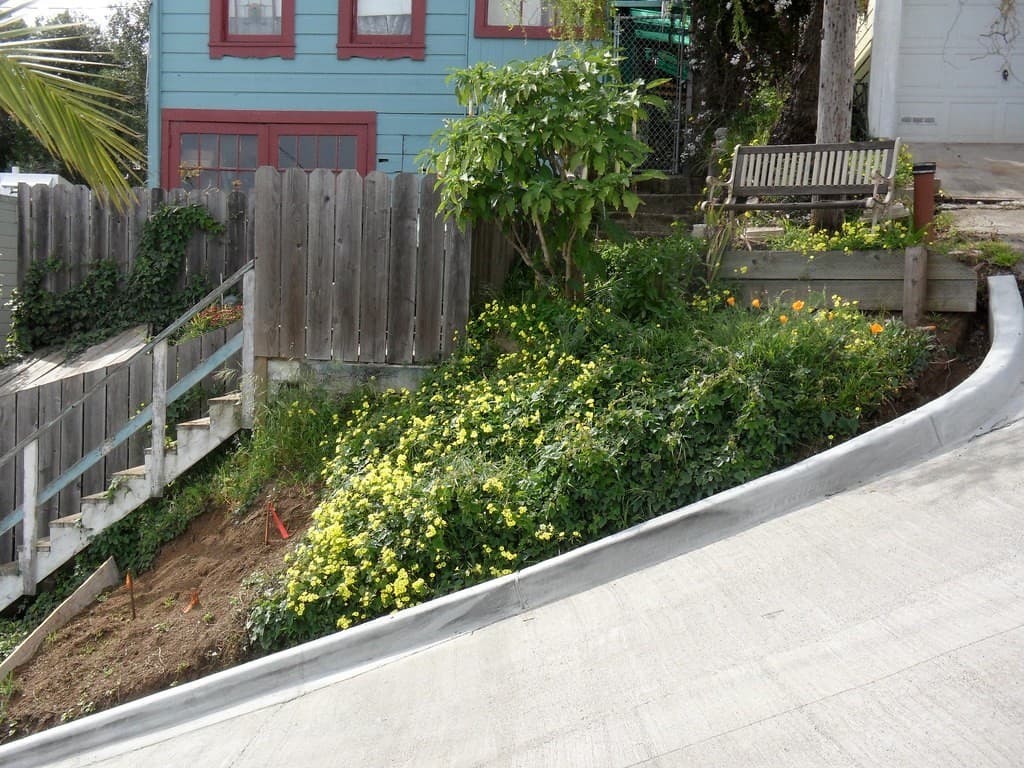
Bradford is the sprint in this collection. Above Tompkins Avenue, the road includes the concrete ramp independently reported at 41% over thirty feet. That does not make the entire street a 41% climb. It does give the rider a very abrupt problem to solve near the sharp end of a short ascent.
In April 2026, British hill-climb champion Harry MacFarlane matched a long-standing Strava segment time of 14 seconds here. His uploaded effort was reported at 1,058 watts on average. That is an elite sprint, not a power target every visitor must reach; it demonstrates how much can be packed into a street that would scarcely register as a distance on a normal ride.
His attempt helped provoke a burst of local challenges. The attraction is easy to understand: a short, recognisable line, a time to chase and a ramp that prevents the result from being just another flat sprint. Simply reaching the top without putting a foot down is a satisfying goal in its own right.
Unlike an organised hill climb, a Strava attempt does not clear a road for you. Look at the ramp before committing, keep the attempt within the space actually available, and leave other people out of the competition. Bradford is worth seeking out for its compact absurdity: a small piece of concrete can occupy a much larger place in a rider’s memory.
View Bradford Street on Strava
Eldred Street, Los Angeles
Los Angeles, California
Eldred belongs to a side of Los Angeles that rewards getting off the obvious routes. Its eastern portion in Highland Park is reported at 33%, but its better cycling introduction comes from an event with a more memorable name: Feel My Legs, I’m a Racer.
Organiser Matt Ruscigno included Eldred as hill number two in the 2011 edition, a ride built around ten difficult Los Angeles hills. Most participants were testing themselves, rather than racing for points. The group travelled between the climbs together and regrouped after the last rider had reached the top. The invitation was as much to discover unfamiliar neighbourhoods as to see who climbed fastest.
That gives a useful way to approach Eldred now: as the difficult centrepiece of an urban exploration, with friends to share it. A reported slope above thirty per cent deserves a climbing gear you have already tried under load. The question is whether you can continue applying force without letting the bicycle lose its line. Make the outing larger than one attempt and there is still a good day to be had if the hill wins.
Ruscigno was announcing a tenth edition in 2015; those accounts establish a history, not a current race booking. But their spirit survives as a convincing reason to ride a city’s less familiar streets. An address on a hillside can draw cyclists together just as effectively as a summit sign.
Vale Street, Bristol
Bristol
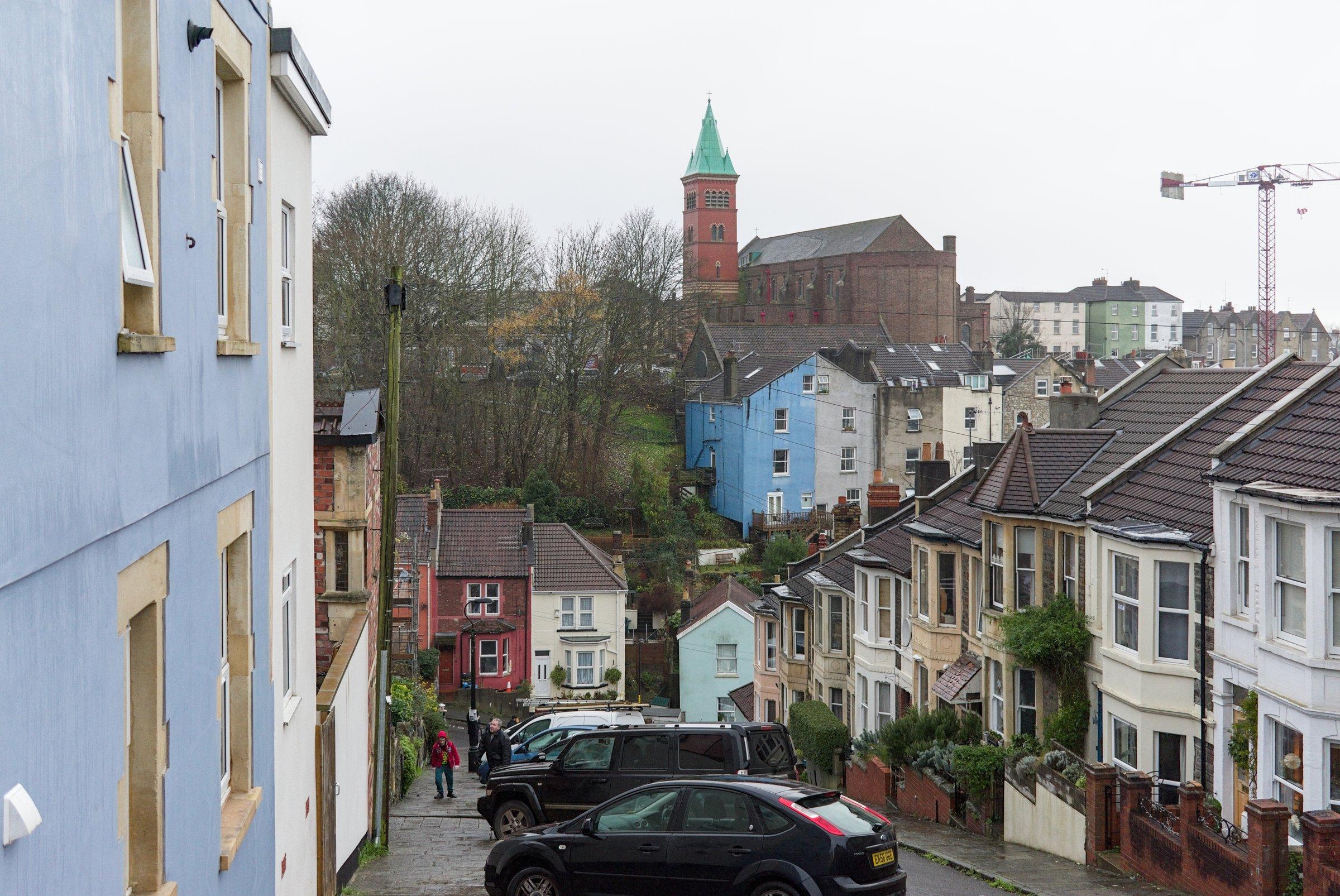
Vale Street makes a compact Bristol challenge, with terraced houses close enough to keep the scale human. In the photograph, cars sit diagonally across the slope while the street drops away between front doors. There is no distant summit to negotiate with. The difficult part arrives almost immediately.
The entry from Park Street and the opening ramp are the pieces to inspect. A sharp turn followed by a large change in gradient can consume the momentum that made the approach feel comfortable. Select the low gear beforehand, then aim for a controlled effort that still leaves you able to steer. An open road does not offer the full width a racer might use at a closed event.
Simon Warren’s riding account singles out the opening metres as the decisive test. The stored segment and shorter profile above describe different extents, so they should not be used to invent a precise maximum. For the rider, though, the practical question is clear enough: can you make the transition and keep the cranks turning through it?
The street also has an Easter egg-rolling tradition, a gentler use of the same gradient. A dedicated current cycling race was not established in this research. Vale works as a short challenge within a Bristol ride: something to inspect, try when conditions and traffic allow, and discuss afterwards. A successful ascent need not be measured against anyone else’s time.

Oberweißbacher Straße, Deesbach
Deesbach, Thüringen
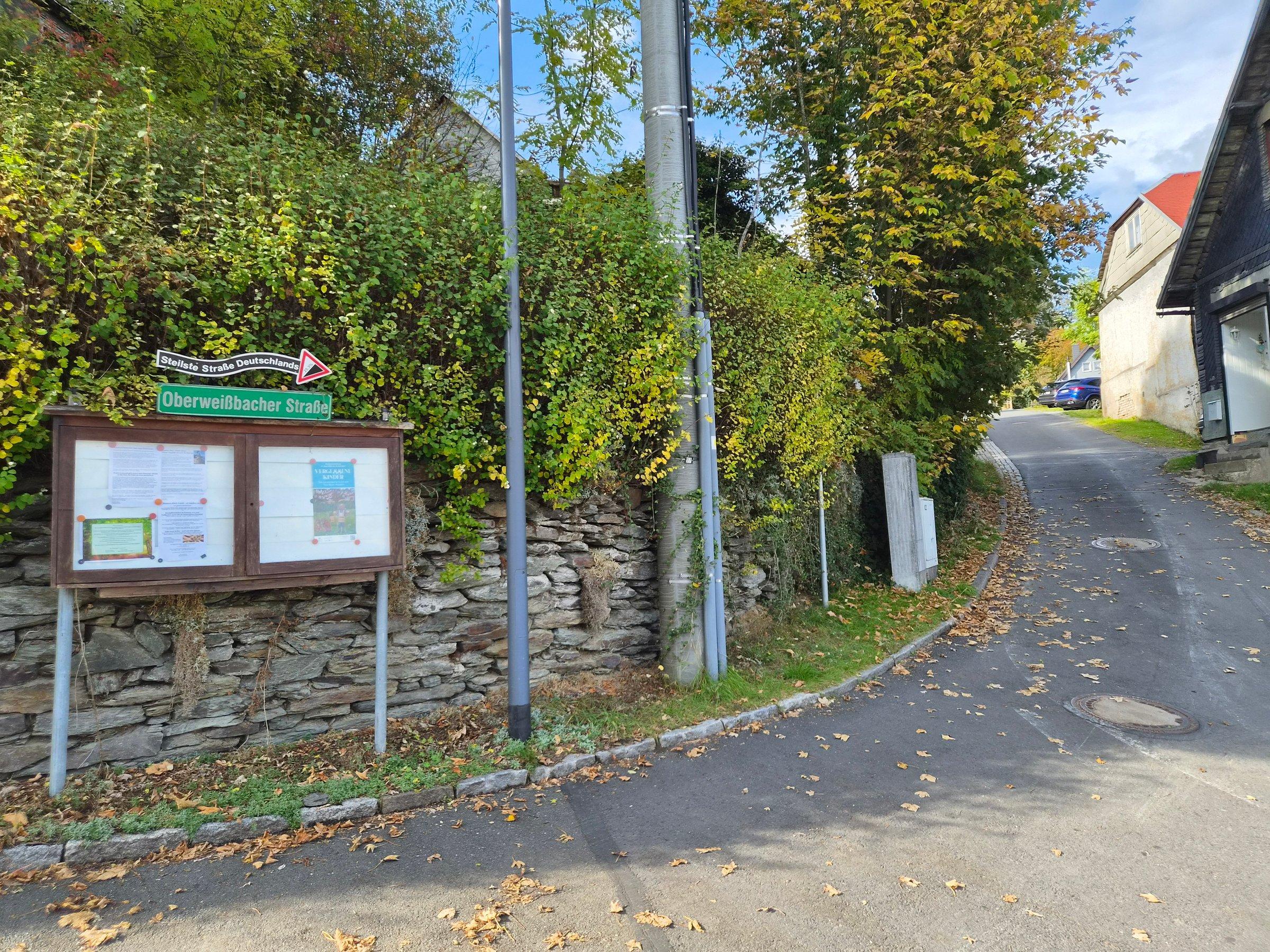
Deesbach turns its steep streets into a village occasion. At The Steilschwein on 28 June 2026, riders contested elimination heats, working their way through successive rounds. A climb that might be a single private achievement on another day became something to repeat under pressure, with spectators lining the course.
The municipal account describes a ramp of around 300 metres and temperatures exceeding 35°C at that edition. Mario Zeuner and Fabienne Jähnert took the titles. The format gives this hill a different demand from Bradford’s brief sprint: enough force to get up, enough judgement to advance, then enough left to face another ascent. Winning the first effort is not the same as winning the afternoon.
Oberweißbacher Straße is promoted at 25.3%, and the village also advertises a separate 22.65% claim. The 2026 report describes a roughly 300-metre ramp without establishing that the course follows the full named Oberweißbacher Straße. What makes the place attractive is the concentration of riding and community around those ramps, rather than a settled national title.
The slate-clad houses and the street-name sign in the photograph place the effort firmly inside the village. This is a destination for someone who likes the sociable theatre of hill climbing: friends close enough to watch the struggle, a finish reached under your own power, and possibly another round. The 2026 event is documented; confirm future dates with the organiser before making it the centre of a trip.

And who actually owns the record?
Baldwin Street holds the Guinness title at 34.8%. Ffordd Pen Llech took it in 2019 with an inside-curve measurement of 37.45%, before Baldwin regained it on 8 April 2020. Under the revised centreline assessment, Harlech measured 28.6%. The argument was about which line made a fair comparison.
A 35% gradient means 35 metres of rise per 100 metres horizontally, about 19.3° from level. Guinness’s published explanation uses the steepest ten-metre section of a public vehicular thoroughfare, rather than the average over a whole street. Those details explain why higher numbers elsewhere do not automatically displace its recognised holder.
The corner that changed the record
A few feet sideways. A different hill.
A repeatable centre line makes the comparison fair.
Compare the published gradient claims
These are different measurements, not a common ranking. Map numbers follow article order and mark stored ascent starts, not surveyed maxima.
| Street | Figure | Scope |
|---|---|---|
| Baldwin | 34.8% | Recognised Guinness record; centre line. |
| Ffordd Pen Llech | 37.45% / 28.6% | Former inside-curve figure / revised centre line. |
| Canton | Reported 37% | Equivalent measurement window not established. |
| Bradford | Reported 41% | Independent report over 30 ft, about 9.14 m. |
| Eldred | Reported 33% | Local published figure; equivalent survey not established. |
| Vale | Conflicting figures | No definitive maximum adopted here. |
| Oberweißbacher Straße | Promoted as 25.3% | Municipal claim, not an established whole-road average. |
The record is a good way into these streets. The riding is the reason to remember them. Pittsburgh offers a whole day of hills and company; Deesbach has turned repeated ascents into a contest; Harlech’s race showed how much skill can fit into less than a minute. Elsewhere, one clean climb may be enough to make the detour worthwhile.
If you have already run out of gears while moving the little bicycle up the illustrated slope, the real question should now feel more concrete. Which street would you choose, what gear would you bring, and who would you want waiting at the top?