Cycling stories
Mallorca’s 10 most popular cycling climbs
From Palma’s wooded hills to the bends above Sa Calobra, ten ascents that reveal Mallorca by road. A countdown through mountain passes, coastal lanes and hilltop sanctuaries.
By Montivelo · · 9 min read
The climbs across Mallorca
Mallorca is often remembered as a collection of bends: the old road above Sóller, the turn where Sa Calobra loops over itself, a lane climbing away from a small harbour. But the island’s climbs offer more than a familiar photograph. They connect places that feel quite different from one another, from the outskirts of Palma to the wooded Tramuntana and the sanctuaries standing above the inland plain.
This is our editorial countdown of ten popular Mallorcan ascents, rather than a ranking by rider numbers. Each entry follows a particular approach. There are coastal returns, mountain crossings and roads that finish at a sanctuary; the variety is part of the attraction. The map marks catalogue approach starts wherever stored location data is available.
10. Coll de sa Creu
Palma De Mallorca, Spain
Palma has a mountain road close at hand. The Coll de sa Creu climbs away from the city’s western edge into woodland, trading the capital’s streets for a road that winds through the hills. It is an appealing opening chapter for a cycling visit: the change of setting arrives without a long journey across the island.
The approach here is from Palma. Beyond the pass, the road continues towards Calvià, so the climb can serve as a crossing rather than a summit to visit and retrace. There is pleasure in that simple geography — leave a city, climb a wooded ridge, emerge into a different piece of countryside.
Sa Creu earns its place through that everyday usefulness. A ride need not reach the highest mountains to have a clear shape and a memorable ascent. For riders based around Palma, this is one way to put a mountain road at the centre of a shorter outing.
9. Coll d’Honor
Bunyola, Illes Balears
Bunyola sits at the foot of the Tramuntana, and the road towards Orient makes the transition into the mountains. On this side of the Coll d’Honor, the village gives way to a wooded ascent, with bends and changes of gradient interrupting the climb. The landscape feels enclosed, quite unlike the exposed rock of Sa Calobra.
Over the pass lies Orient. The two villages give the climb a purpose beyond its summit sign: this is a road between inhabited places, passing through the folds of the mountains. Continue through Orient towards Alaró and the crossing becomes part of a loop around the southern foothills.
The linked approach begins in Bunyola; the ascent from the Orient side is a separate route. Here, the attraction is the gradual disappearance of the lowlands behind the trees, followed by the prospect of another valley ahead. Coll d’Honor asks for a place in the itinerary without needing to dominate the whole day.
8. Port de Valldemossa
Valldemossa, Balearic Islands


At Port de Valldemossa, the ride turns inland from the sea. The small harbour sits below the coastal road, reached by a winding lane that must be climbed again to return by road. Arriving from above gives the ascent a peculiar familiarity: the bends have already passed beneath the wheels in the other direction.
The climb follows the narrow Ma-1131 away from the port. Switchbacks lift the road above the coast, and the sea remains part of the landscape as the harbour falls away below. The road’s confined width matters more than any photograph suggests; leave room for oncoming traffic, particularly on the descent to the start.
This is the harbour ascent, distinct from the inland climb towards Valldemossa village. It works as an out-and-back addition to a coastal ride, with a definite change of scene at the bottom. The return is the point of the detour: a climb that begins beside the water and leads back into the hills.
7. Sant Salvador
Felanitx, Illes Balears


Sant Salvador draws the eye upwards from the countryside around Felanitx. The sanctuary stands on a hill in southeastern Mallorca, away from the Tramuntana passes that occupy so much of the island’s cycling imagination. Its setting gives the ascent a different character: a road towards a landmark above the surrounding country.
The bends lead towards a summit occupied by buildings and monuments rather than a bare mountain crossing. The sanctuary’s origins reach back to the fourteenth century, although its present church is later. The view from the top gathers the countryside and coast into one panorama, giving the road an unmistakable destination.
The entry here is Sant Salvador near Felanitx, not the sanctuary of the same name at Artà. It belongs naturally in a ride through the southeast, where a hilltop ascent can punctuate a day on country roads. Reaching the sanctuary offers a reason to stop that has little to do with the time recorded on the climb.
6. Puig de Randa
Algaida, Illes Balears
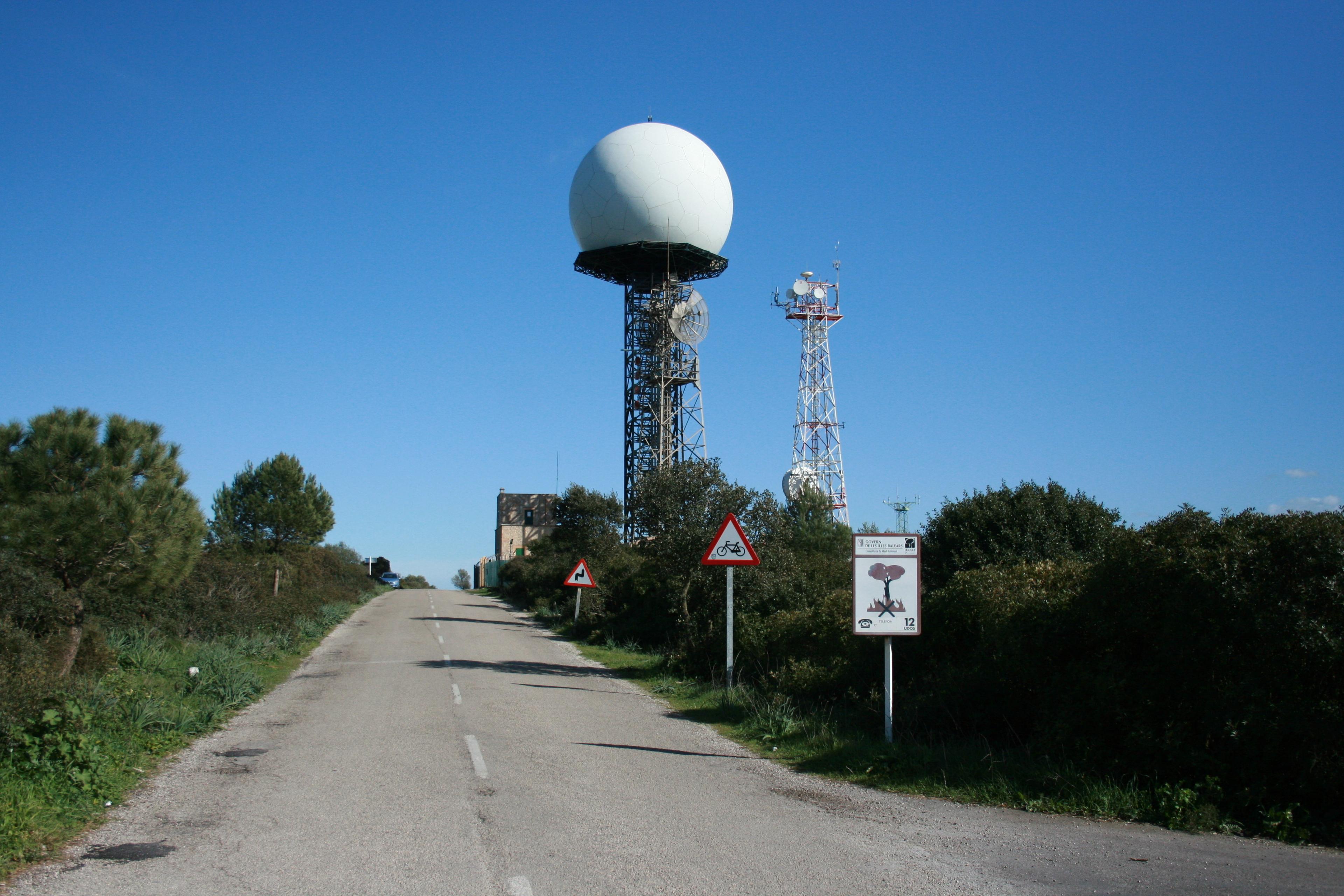
Puig de Randa rises in Mallorca’s interior, with the Santuari de Cura at the top. It is a climb towards a place, not merely a pass: the sanctuary gives the road a finish, and the surrounding plain gives the hill its prominence. The island opens out around it rather than gathering into another wall of mountains.
This approach starts at Randa village and follows the road to Cura. It excludes the lower approach from Llucmajor, a distinction worth keeping when comparing profiles or planning a ride. The climb’s compact shape makes it easy to give the ascent its own part of the day without making the entire outing a mountain expedition.
At the sanctuary, the view is the reward for leaving the plain. There is a gentler kind of arrival here than on a through-road pass: a courtyard, a building to walk towards, a reason to linger. Randa brings a change of height and perspective to a ride through the interior.
5. Coll de Femenia
Pollença, Balearic Islands
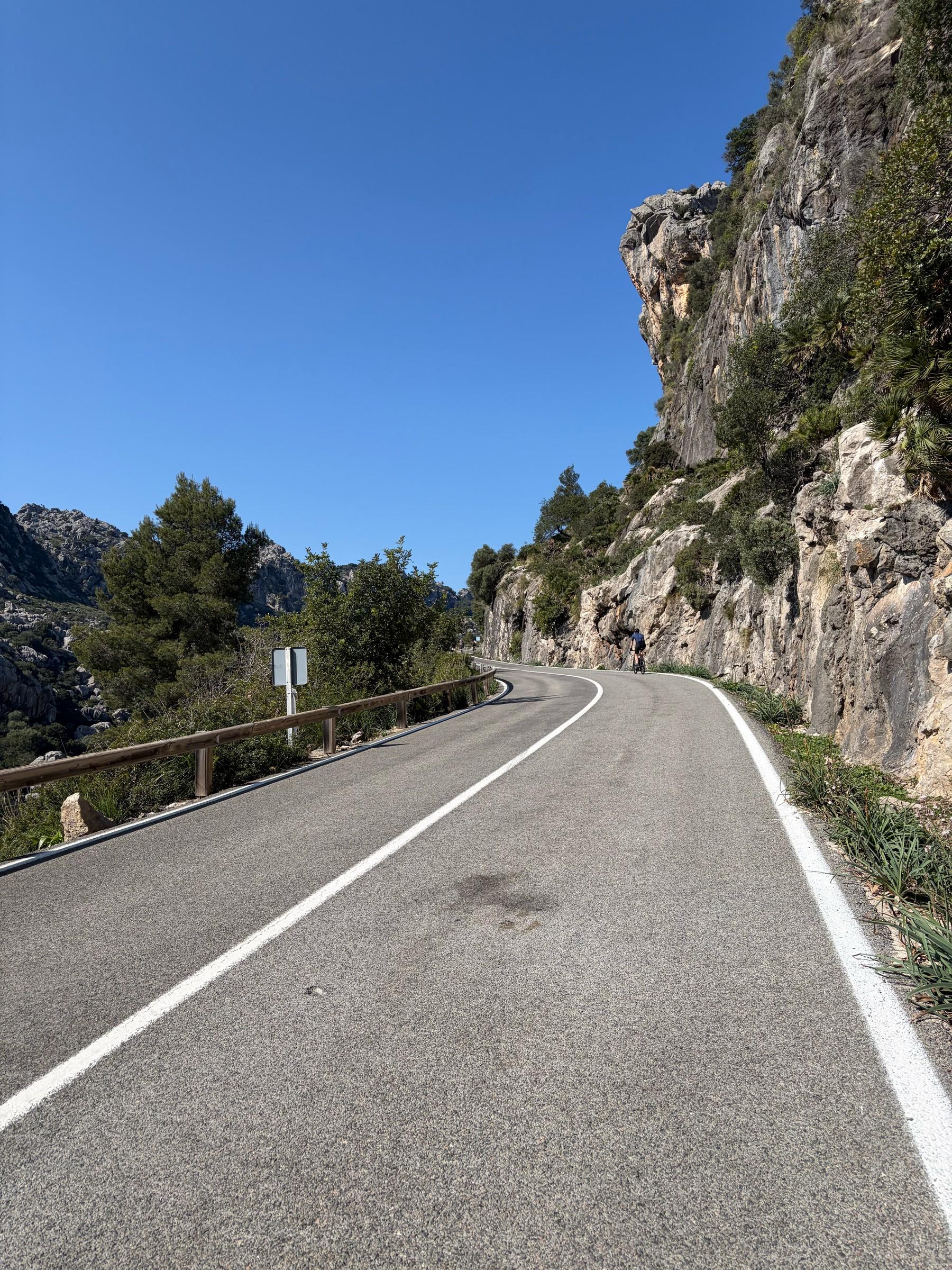
From the Pollença side, the Coll de Femenia carries the Ma-10 into the Tramuntana. Behind the lower slopes lie the town and the Formentor peninsula; ahead, the road enters a landscape of peaks and cliffs. Its appeal is that unfolding transition, as the north of the island gives way to the mountain interior.
The ascent starts west of Pollença, rather than in the town centre. Beyond the pass, the road continues over rolling ground towards the turn for Lluc. Reaching the top therefore completes one climb, not the whole journey into the mountains — a useful distinction when the name Femenia is used for a much longer ride.
Femenia and Sa Batalla can form two sides of a mountain loop, with Lluc between them. They are also approaches to longer outings towards Sa Calobra. Here, though, Femenia deserves attention on its own terms: a sustained ascent whose changing views make the journey into the Tramuntana part of the pleasure.
4. Coll de sa Batalla
Selva, Balearic Islands

Caimari stands at the foot of the mountains. The Coll de sa Batalla climbs from here towards the Ma-10 near Lluc, offering a direct passage from the foothills into the Tramuntana. Woodland and bends give much of the road an intimate scale, with the larger mountain landscape opening between them.
The bends climb through pine woodland before the views open towards the top. The succession of turns gives the road a mountain character without the long approach of Puig Major. Here the interest is close at hand: the forest beside the road, the hillside changing direction, the next bend leading further into the range.
At the top, the road meets a wider network of mountain routes. Lluc lies nearby, while the Ma-10 offers onward travel towards Femenia or deeper into the range. Sa Batalla can be the day’s main ascent or the entrance to a longer ride. Either way, the Caimari approach gives the mountains a clear beginning.
3. Coll de Sóller
Sóller, Balearic Islands

On the northern side of the Coll de Sóller, the old pass road folds back across the hillside. Hairpin follows hairpin, turning a relatively compact piece of mountain into a long sequence of changes in direction. Glimpses towards the valley give each turn a slightly different frame.
The approach here is from Sóller, using the Ma-11a over the pass. It is distinct from the shorter southern ascent near Bunyola. The road’s repeated bends are its defining feature, but the interest also lies in the crossing itself: leaving one side of the mountains and reaching a road that falls towards the other.
Sóller and Puig Major begin from the same valley but offer different experiences. On this climb, the turns keep the hillside close and the summit feels earned in small increments. There is no need to count every hairpin to appreciate the old road’s patient route through the terrain.
2. Puig Major
Sóller, Illes Balears
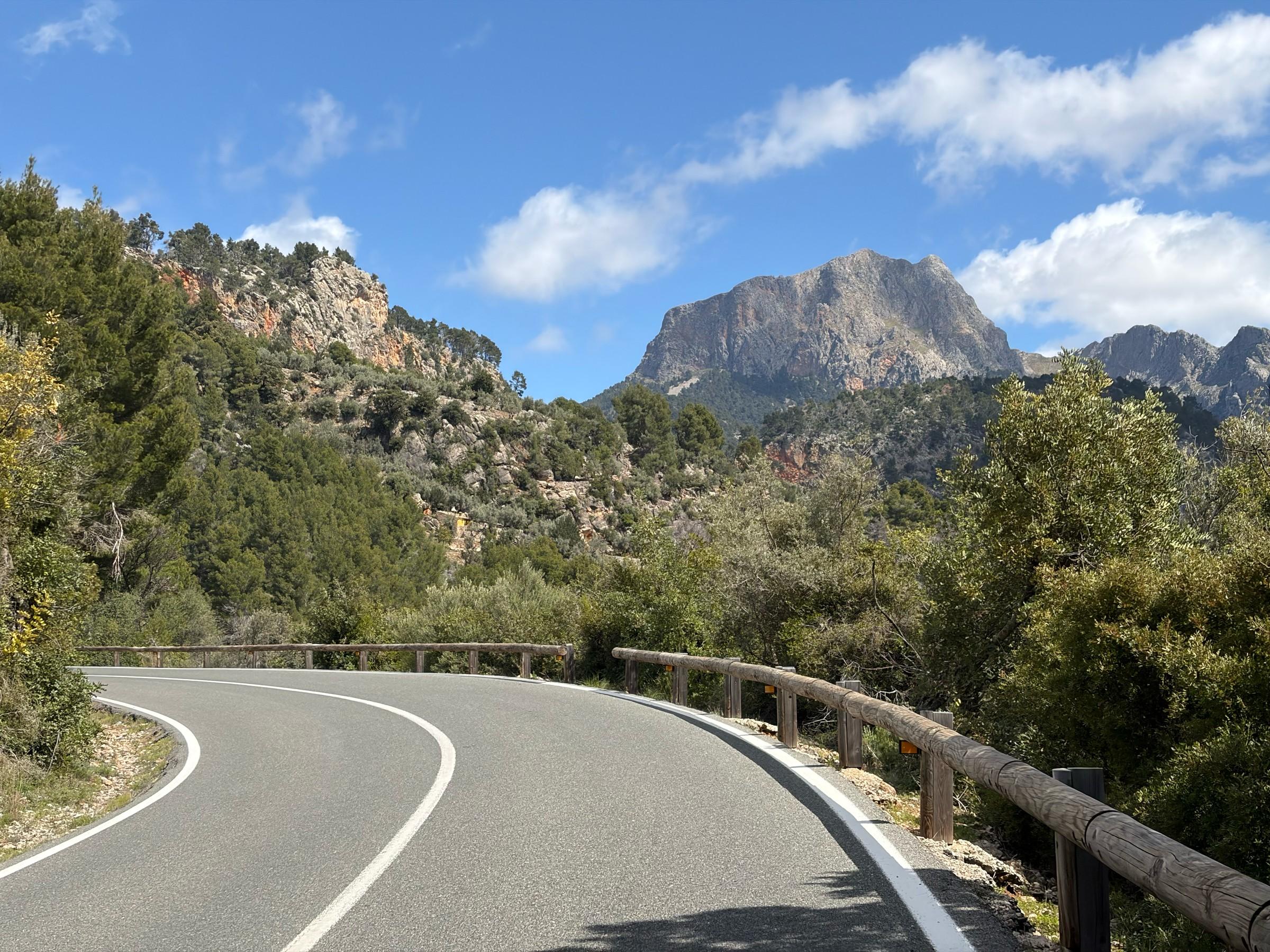
The climb called Puig Major takes the Ma-10 out of Sóller and into the high Tramuntana. Its name needs one qualification: the ordinary road ascent reaches the Monnàber tunnel area, not the mountain’s summit. The separate road towards the military installation is restricted; it is not part of the route described here.
This is a longer ascent than the neighbouring Coll de Sóller, with broad stretches of climbing between woodland and rock. Views towards the valley appear along the way, but the road does not offer a continuous open panorama. Much of its character lies in the accumulated distance, as Sóller becomes a place left far below.
Beyond the tunnel, the Ma-10 continues into the reservoir country. The linked approach covers the climb from Sóller, rather than the shorter ascent from the Escorca side. Puig Major gives a ride through the Tramuntana its long upward passage: a road that changes the scale of the day before delivering it into the mountain interior.
1. Sa Calobra
Escorca, Illes Balears
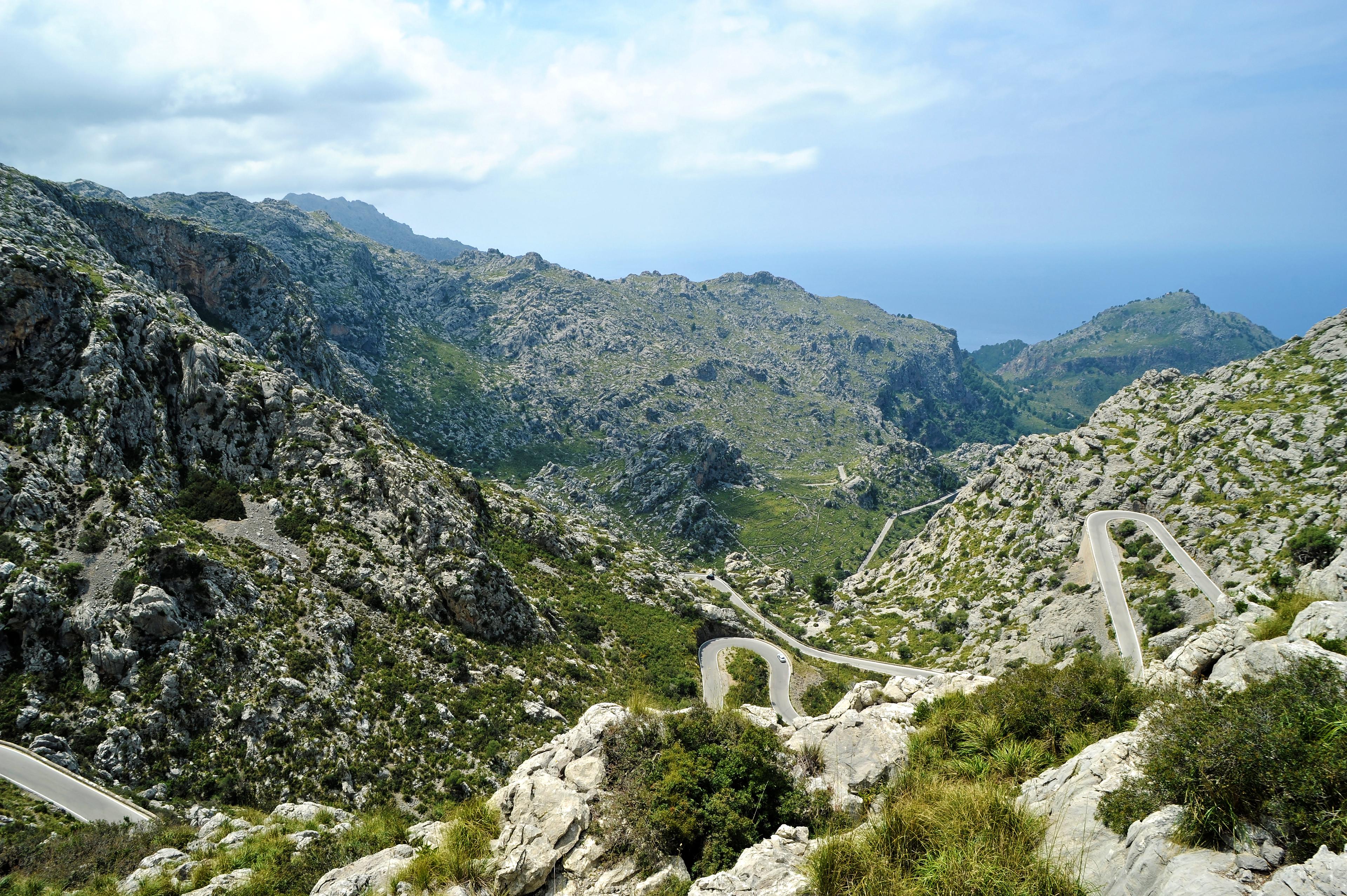
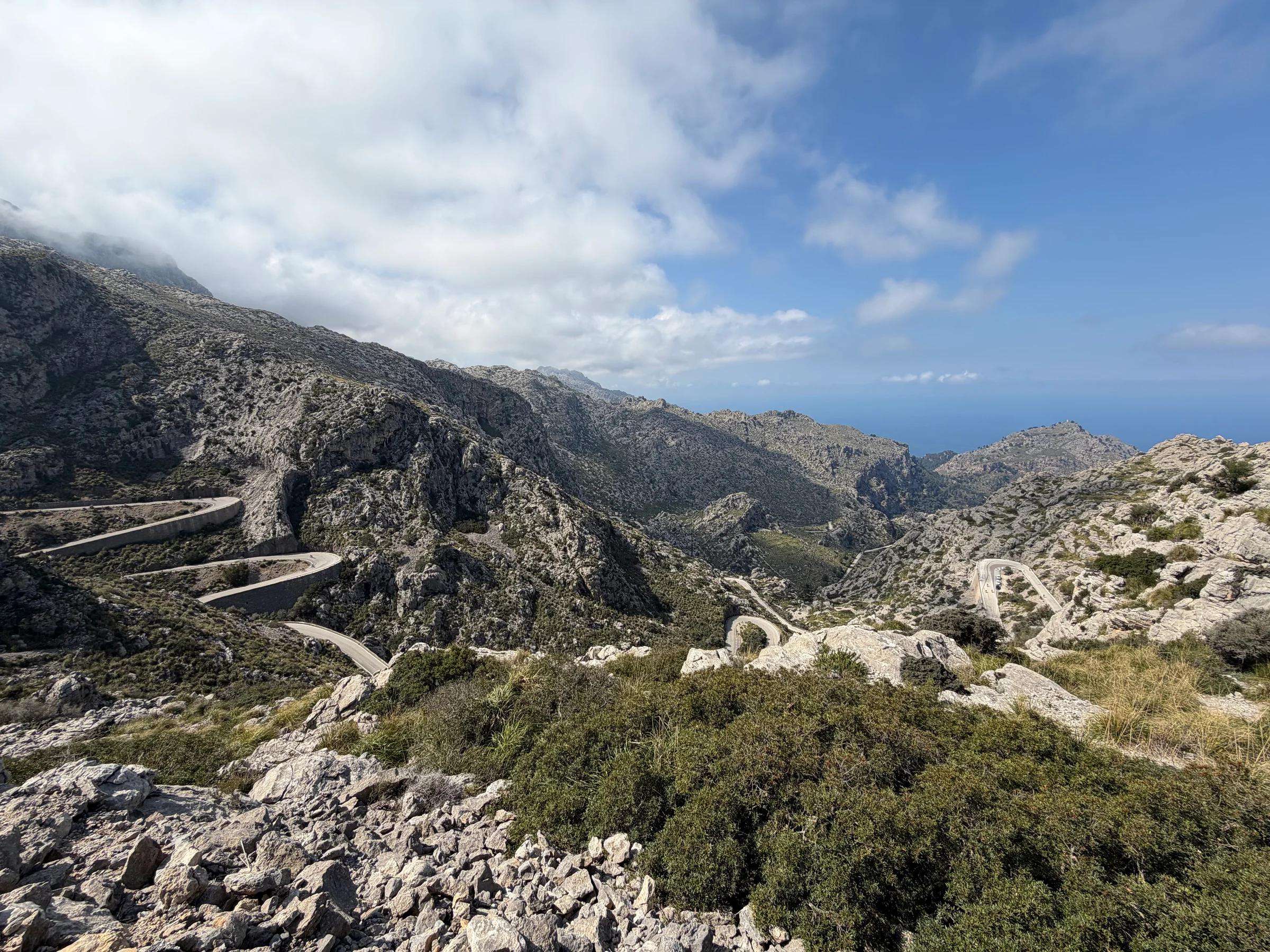
Sa Calobra begins at the coast and climbs to the Coll dels Reis. For riders arriving along the mountain roads, the usual sequence reverses the familiar order: descend towards the village first, then climb back out. The road seen from above becomes the road experienced bend by bend.
Rock, exposed slopes and tight turns give the ascent its unmistakable form. Near the top, the Nus de sa Corbata loops the road over itself — a piece of road engineering that has become inseparable from the climb’s image. Lower down, the coast gives way to a mountain landscape that makes the return feel much larger than a simple retracing of the route.
It takes first place in our countdown for the way these elements belong together: the coastal start, the ascent through the rock and the final turns towards the pass. The climb finishes at the Coll dels Reis; the onward road back to the Ma-10 is another part of the journey. Sa Calobra is a destination, but its return road is the ride to remember.
Honourable mention: Cap Formentor
Pollença, Islas Baleares
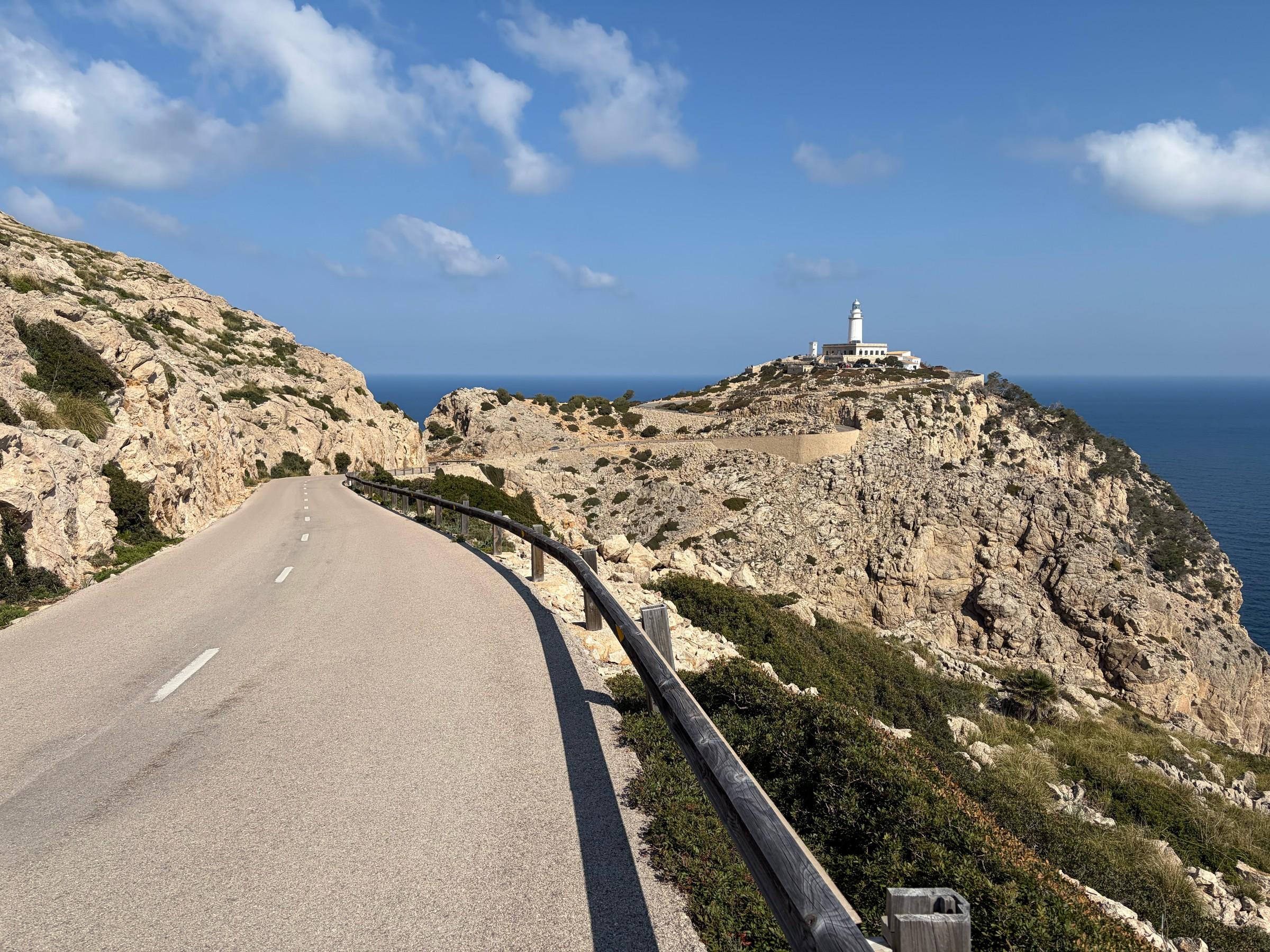
The road to Cap Formentor deserves a place at the end of this journey. From Port de Pollença, the Ma-2210 heads along the peninsula towards the lighthouse, with climbs and descents replacing the single upward passage of a mountain pass. The bay gives way to a more exposed coastline, and the lighthouse provides a destination at the far end of the road.
Its appeal lies in that changing relationship with the sea: a view across the bay, another rise, another stretch of coast. Treat it as an undulating out-and-back ride rather than one continuous ascent. Seasonal motor-traffic restrictions apply on the peninsula; cyclists are permitted under the published access arrangements, but check the current rules before setting out.