Cycling stories
The 20 climbs most frequently featured in the Tour de France
Twenty roads the Tour keeps coming back to. From the Chevreuse valley to Tourmalet, a journey through the landscapes, rivalries and memories that give these climbs their place in cycling.
By Montivelo · · 15 min read
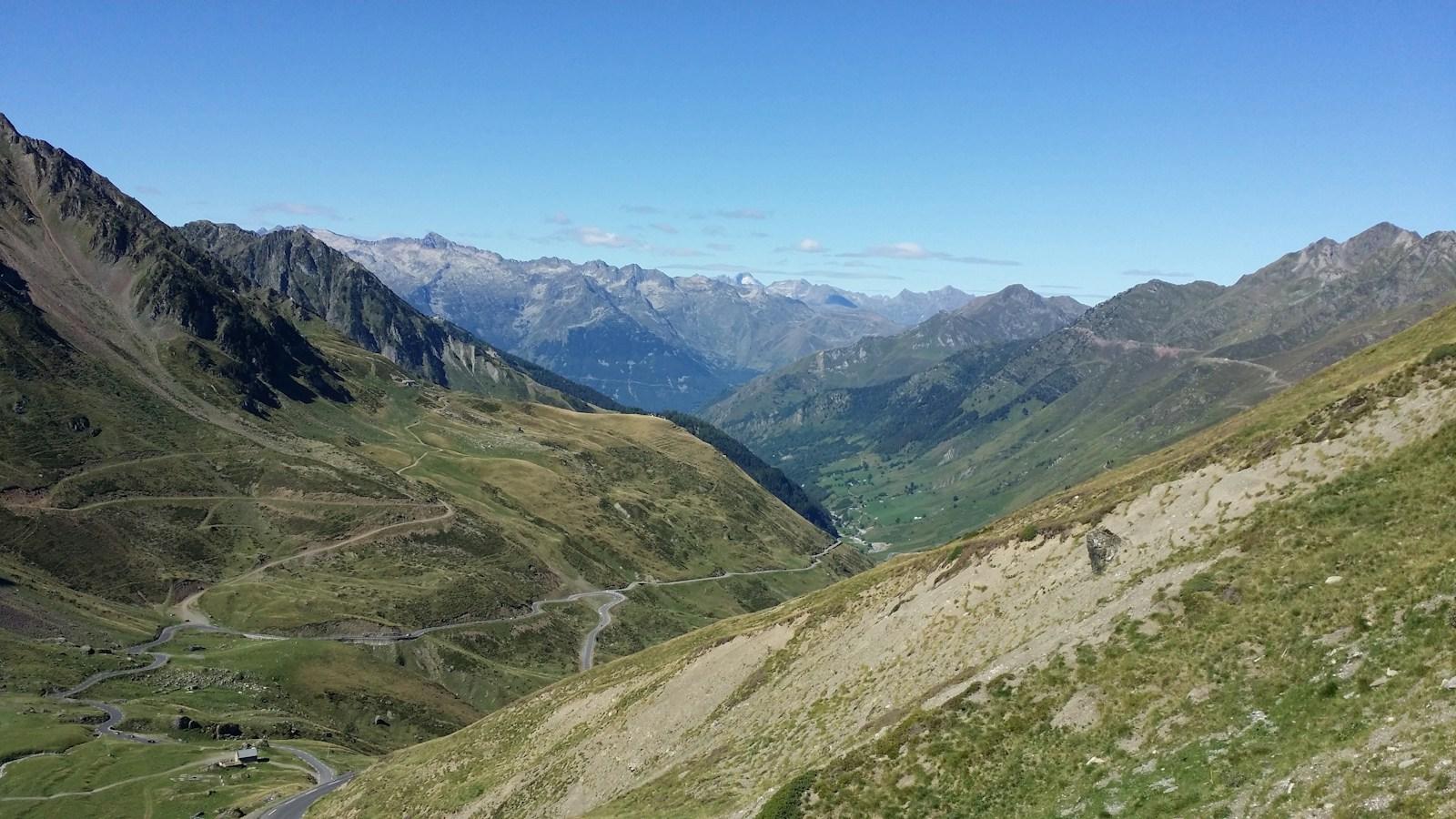
The road and mountain landscape at the Col du Tourmalet. Photo by Jeff Gaura on Unsplash · Licence
The climbs across France
A mountain name can summon an entire afternoon of racing. Galibier: a rider alone above the treeline, a yellow jersey struggling behind. Ventoux: white stone, wind, the road disappearing around another bend. The Tour returns to these places until their names become part of the language of cycling. Ride them yourself and the television images acquire a gradient, a distance, a demand on the legs.
This countdown follows twenty of the race’s most frequently featured climbs, from the hills outside Paris to the high passes of the Alps and Pyrenees. The figures count recorded stage appearances in the ranking used here; historical crossing totals can differ.
20. Col de Vars
Jausiers, Provence-Alpes-Côte d'Azur
Featured in 15 recorded Tour stages.
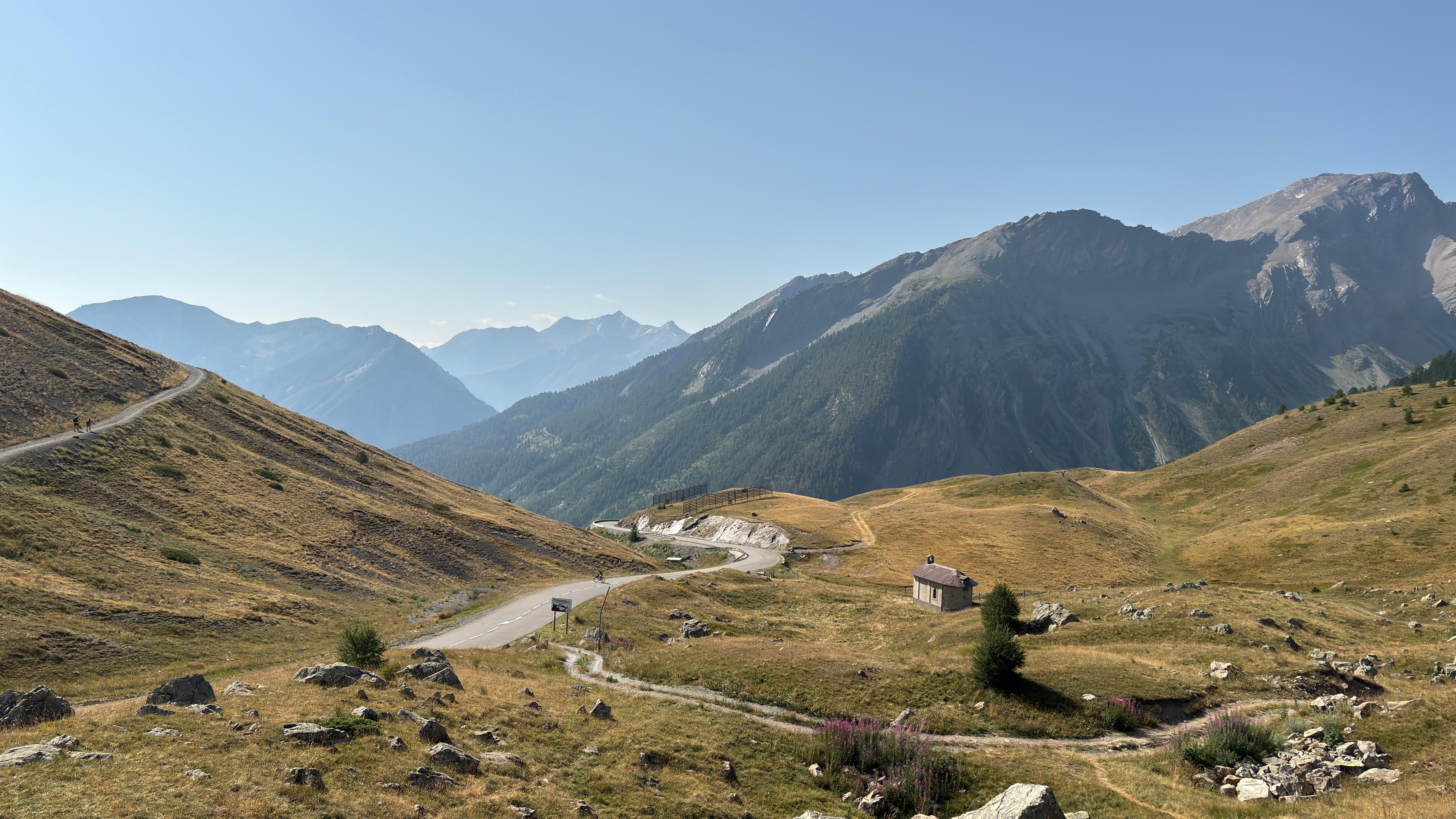
From Guillestre, the Col de Vars unfolds in chapters: the climb out of the valley, the villages, the ski station, then the final road to the pass. The changing gradient makes it difficult to settle into one effort for the whole ascent. Easier stretches offer a little recovery; the steeper ones bring the mountain back into focus.
Vars often appears early in a larger Alpine undertaking. In 2024, Richard Carapaz led over it on the stage from Embrun to Isola 2000, with the Bonette still ahead. On a day of that scale, even a substantial pass can become a preliminary. Its contribution is measured later, in the riders who no longer have the legs to follow.
The northern approach here begins at Guillestre. Its overall average folds the gentler kilometres into the harder climbing, smoothing away some of the road’s changes of mood. Above the resort, the final rise brings the sense of a crossing into view: one valley behind, another waiting beyond the summit.
19. Côte de Saint-Rémy-lès-Chevreuse
Saint Rémy Lès Chevreuse, Île-de-France
Featured in 15 recorded Tour stages.


Southwest of Paris, the Chevreuse valley is familiar weekend territory: short hills, wooded roads and villages within reach of the capital. Saint-Rémy belongs to that everyday cycling landscape. Its ascent towards Chevincourt is brief enough to fit into a local loop, steep enough to interrupt a conversation.
For the Tour, the hill has often marked the closing hours of a much longer journey. In 2019, Tim Wellens took the mountains points here on the final stage towards Paris. The great passes were already behind the peloton; there was still a summit to cross before the Champs-Élysées.
The road has a different life once the race has gone. There is no need for a mountain expedition to find it, and its modest length leaves room for another hill, another village, another turn through the valley. Frequent appearances in July give a familiar local ascent an unexpected place among the Tour’s mountain names.
18. Puy de Dôme
Orcines, Auvergne
Featured in 15 recorded Tour stages.

The photograph is almost inseparable from the mountain: Jacques Anquetil and Raymond Poulidor, shoulder to shoulder on the Puy-de-Dôme in 1964. The rivalry is held in a few centimetres of space between them. More than sixty years later, that image still gives the road an intimacy few climbs possess.
The volcanic summit rises above the Auvergne, its final road curling steeply around the mountain. When the Tour returned in 2023, Michael Woods won the stage on those upper slopes. The landscape was recognisable from the old photographs, even as a new race played out on it.
The route linked here measures the steep summit road; the longer profile includes the approach from Clermont-Ferrand. That distinction matters, as does access: the summit road is closed to ordinary cycling outside authorised events. Puy-de-Dôme can inspire a visit without being an ascent to add casually to a riding itinerary.
17. Col des Aravis
La Giettaz, Auvergne Rhône-Alpes
Featured in 16 recorded Tour stages.


At the Col des Aravis, the northern Alps feel inhabited. Pastures, chalets and the roadside buildings at the pass sit beneath much larger mountains. On a clear day, Mont Blanc draws the eye beyond them. The road offers a crossing through a working landscape as well as a view.
The Tour uses Aravis as a connection between valleys and the harder climbs around them. Its place in a stage can be easy to overlook when a summit finish commands the headlines. Yet a race is shaped by these connecting roads too: the ascent that makes a breakaway possible, the descent that delivers tired riders to the next climb.
This approach comes from the La Giettaz side, southeast of the pass. It is a compact ascent with enough gradient to demand attention, opening towards the summit after the lower bends. Arriving from the opposite side produces a different ride; the view at the top is the point where the two roads meet.
16. Ballon d’Alsace
Saint Maurice Sur Moselle, Lorraine
Featured in 16 recorded Tour stages.


Before the Tour became synonymous with the high Alps and Pyrenees, there was the Ballon d’Alsace. In 1905, René Pottier’s climbing on this Vosges road helped establish the mountain rider as a figure in the race. The Tour had already encountered other climbs, but the Ballon occupies a particular place in its early imagination.
The northern ascent rises from Saint-Maurice-sur-Moselle, through forest towards the rounded summit landscape. There is less bare rock and exposure here than on the great southern passes. Trees contain the view for much of the climb, making the opening of the landscape near the top more noticeable.
Its steady climbing gives the road a quiet seriousness. The bends arrive without the numbered theatre of Alpe d’Huez, and the effort accumulates beneath the trees. Pottier’s name belongs to a distant age of bicycles and racing, but the gradient remains a direct enough connection to it.
15. Col de la Croix-de-Fer
Vaujany, RA
Featured in 17 recorded Tour stages.


The Croix de Fer is a long journey through changing Alpine scenery. From the Oisans side, the road climbs past Le Rivier-d’Allemond and towards the Grand’Maison reservoir before reaching the open upper slopes. Water, rock and the engineering of the road give this approach a character distinct from the Maurienne ascent.
In 2006, the Tour placed the pass between Galibier and the Col du Mollard on the stage to La Toussuire. That sequence suggests its scale better than a summit photograph can. The Croix de Fer was one substantial effort among several, each leaving less strength for the next.
The route here follows the Oisans approach, with changes of gradient and descending sections that make the average an incomplete description. Progress comes unevenly. By the time the iron cross at the summit is reached, the road has offered several versions of the mountain, and the final open kilometres feel a long way from the reservoir below.
14. Col du Télégraphe
Saint Michel De Maurienne, Rhône-Alpes
Featured in 17 recorded Tour stages.


From Saint-Michel-de-Maurienne, the Télégraphe climbs through trees above the valley. The road gains height in a succession of bends, sheltered for much of the ascent, before reaching the pass. Its wooded setting gives little indication of the exposed country waiting further south.
For many Tour stages, Télégraphe is the first half of a larger story: over the top, down to Valloire, then up towards Galibier. In 2007, Mauricio Soler went on to win in Briançon after attacking on Galibier. Télégraphe had already supplied a substantial climb before the decisive move came.
Ridden on its own, the ascent deserves more than a passing mention. The gradient is sustained, and the valley recedes steadily beneath the road. Ridden before Galibier, the same kilometres carry an extra question: how much effort can be spent here when the higher mountain is still ahead?
13. Mont Ventoux
Bédoin, PACA
Featured in 18 recorded Tour stages.
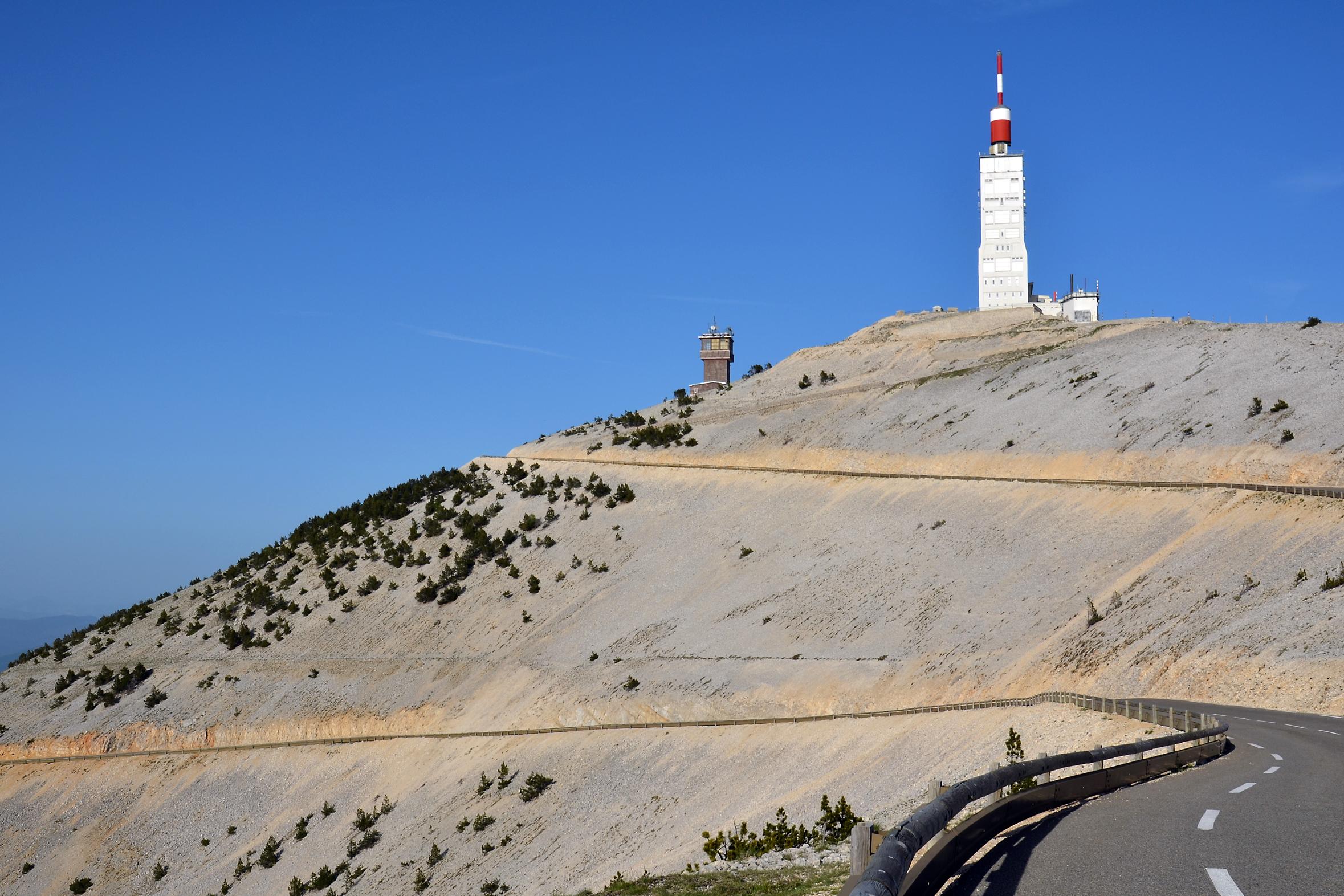

The forest conceals much of Ventoux on the climb from Bédoin. For a long stretch, there is little of the pale summit landscape familiar from photographs, only a steep road through the trees. Then the shelter falls away and the upper mountain comes into view: white stone, an exposed slope, the summit buildings above.
Ventoux carries difficult memories. Tom Simpson died here during the 1967 Tour; his memorial remains beside the upper road. The mountain has also witnessed emphatic victories, including Chris Froome’s in 2013. These histories share the same ascent, and a visit leaves room for both celebration and reflection.
The Bédoin approach is a sustained undertaking whose gentler opening does little to prepare the legs for the forest. Higher up, wind and exposure can alter the character of the ride. The summit may remain visible for a long time before it is reached, making the final distance feel unusually tangible.
12. Col de Menté
Lez, Midi-Pyrénées
Featured in 18 recorded Tour stages.

The Col de Menté is closely bound to the day Luis Ocaña’s 1971 Tour ended. Wearing yellow, he crashed on the descent in a storm and abandoned the race. A mountain stage that had offered the possibility of victory became the defining loss of his campaign.
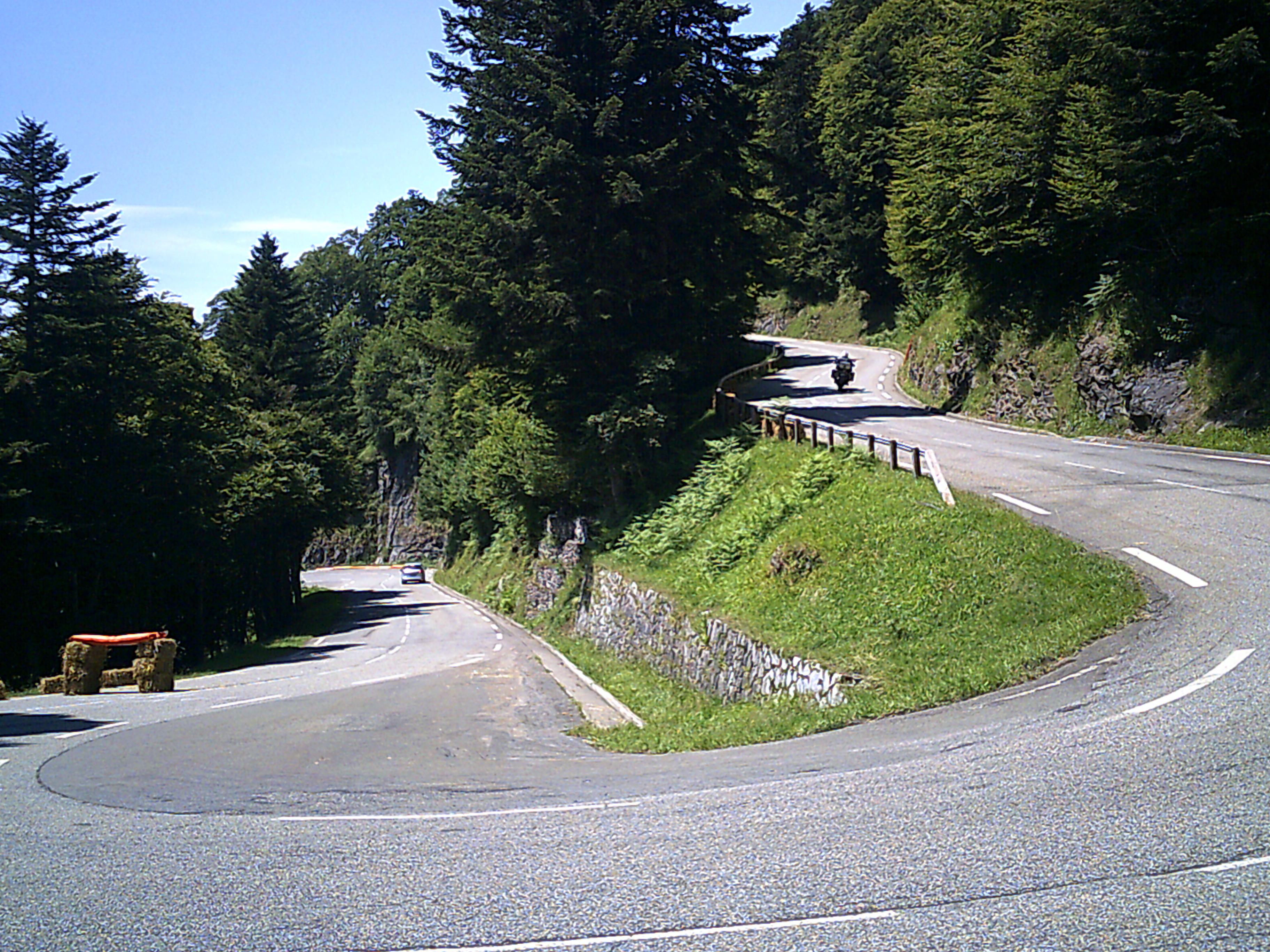
The pass itself is a wooded crossing in the central Pyrenees, with climbing roads on either side. This route approaches from the east, through the Ger valley and the La Henne Morte side. It is longer and less steep on average than the ascent from Saint-Béat, though the work still accumulates over a substantial distance.
The trees and bends give the road a more enclosed character than the high, open Pyrenean summits. Here, the history attaches to the descent as strongly as to the climb. Reaching the pass is only part of the journey; the road continuing beyond it belongs to the story too.
11. Col d’Izoard
Guillestre, Provence-Alpes-Côte d'Azur
Featured in 18 recorded Tour stages.

The Casse Déserte gives Izoard its unmistakable face. Pale scree and broken towers of rock surround the southern road, replacing the trees with a landscape that looks almost stripped of life. The final approach passes through this strange amphitheatre before rising again to the col.
Memorials to Fausto Coppi and Louison Bobet place cycling’s past within that landscape. Their names are encountered beside the road, close to the gradients on which reputations were made. The setting lends those few kilometres a weight that a results list cannot quite convey.
The route here starts at Guillestre and includes the Guil valley approach before the harder climbing above Arvieux and Brunissard. Those early kilometres lower the average gradient; the upper ascent remains demanding. The reward arrives in stages, from the valley road to the climb, then the sudden change of scenery in the Casse Déserte.
10. Col de la Colombière
Marnaz, Rhône-Alpes
Featured in 21 recorded Tour stages.

From the Scionzier side, the Col de la Colombière climbs towards Le Reposoir before the upper road presses into the mountains. The village offers a moment of human scale beneath the Bargy massif. Above it, the slope grows more exposed and the distance to the summit becomes harder to ignore.
The Tour has also approached via the Col de Romme, adding another climb before returning through Le Reposoir. The two routes share the final road but bring very different quantities of fatigue to it. A pass name on a stage map can conceal quite a lot of work.
This entry follows the direct northern ascent. Its harder upper slopes give the climb a demanding finish, while the southern road from Le Grand-Bornand offers a gentler way to the same col. From either valley, the summit is a meeting point; the effort required to reach it belongs to the chosen side.
9. Col de Portet-d’Aspet
Boutx, Midi-Pyrénées
Featured in 23 recorded Tour stages.
The Portet-d’Aspet is short, steep and largely enclosed by trees. From La Henne Morte, the western ascent gains height quickly, with little distance in which to make the gradient feel gradual. Its modest altitude says little about the effort required.
Fabio Casartelli, the reigning Olympic road champion, died after crashing on the descent during the 1995 Tour. His memorial gives the road a significance beyond the racing that continues to pass through it. A pause here is an act of remembrance rather than another stop on a list of famous cols.
There are no vast summit views to distract from the western climb’s immediate demand. The road, the trees and the next bend hold the attention. It is a concentrated piece of Pyrenean riding, best approached with respect for the steepness of the ascent and the road on the other side.
8. Côte de Châteaufort
Châteaufort, France
Featured in 24 recorded Tour stages.
Châteaufort brings this countdown back to the roads outside Paris. The climb is a short rise from the valley, part of the network of hills that gives local riding its shape. Its place above several famous mountain passes in the ranking reflects how often the Tour has returned here.
In 2012, Châteaufort and Saint-Rémy were the two fourth-category climbs on the final stage of Bradley Wiggins’s winning Tour. In 2019, Yoann Offredo led over Châteaufort. These moments belong to the race’s closing day, with three weeks of effort behind the riders and the streets of Paris still ahead.
The ascent linked here measures less than a kilometre. Its brevity makes pace decisive: a small hill can be an easy interruption or a sharp effort. Combined with the neighbouring valley roads, it offers a way into Tour geography that fits within an ordinary ride from the capital.
7. Col de la Madeleine
La Chambre, RA
Featured in 28 recorded Tour stages.
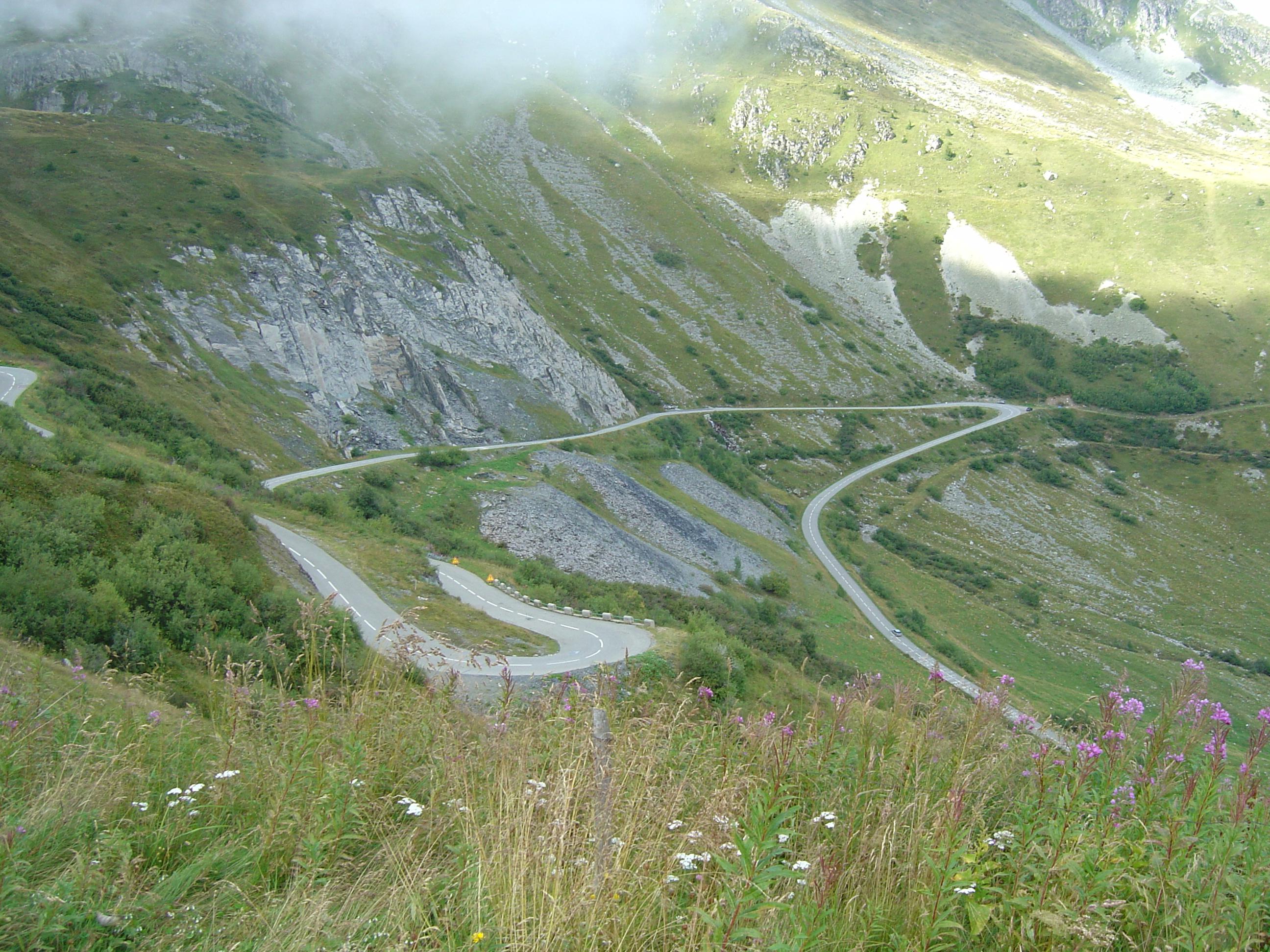

The Madeleine opens into broad Alpine country between Maurienne and Tarentaise. From the southern side, the road climbs towards Saint-François-Longchamp, then continues to the high pass. The landscape expands as the buildings fall behind, leaving the final slopes increasingly exposed.
The Tour first crossed it in 1969, after surfacing of the road was completed. Its relatively late arrival did little to limit its importance. A demanding ascent joining two major valleys soon became a recurring part of the race’s Alpine routes.
The segment here begins partway up the southern side, after the lower approach from La Chambre. It covers the remaining climb to the col; the Col du Chaussy, if included in a ride, is a separate undertaking. Even with the valley kilometres omitted, there is a long spell of climbing before the road finally reaches the skyline.
6. Col d’Aubisque
Laruns, Nouvelle-Aquitaine
Featured in 29 recorded Tour stages.


Above Laruns, the Aubisque rises through Eaux-Bonnes towards Gourette and the open mountain. The early road leaves some room to settle into the climb. Beyond Eaux-Bonnes, the slope becomes more insistent, and the valley begins to feel distant.
The Aubisque was part of the Tour’s pioneering venture into the high Pyrenees in 1910. More than a century of racing has made the crossing familiar, but the scale of that first undertaking remains striking. These were roads on which the race was discovering how much a bicycle rider could be asked to endure.
At the summit, the surrounding peaks take over the view. The road onwards towards Soulor and the Cirque du Litor extends the journey through the mountains, while the western ascent below traces the whole change from town to high country. Aubisque rewards attention to the crossing as much as to the finish of the climb.
5. L’Alpe d’Huez
Le Bourg D'Oisans, Rhône-Alpes
Featured in 34 recorded Tour stages.
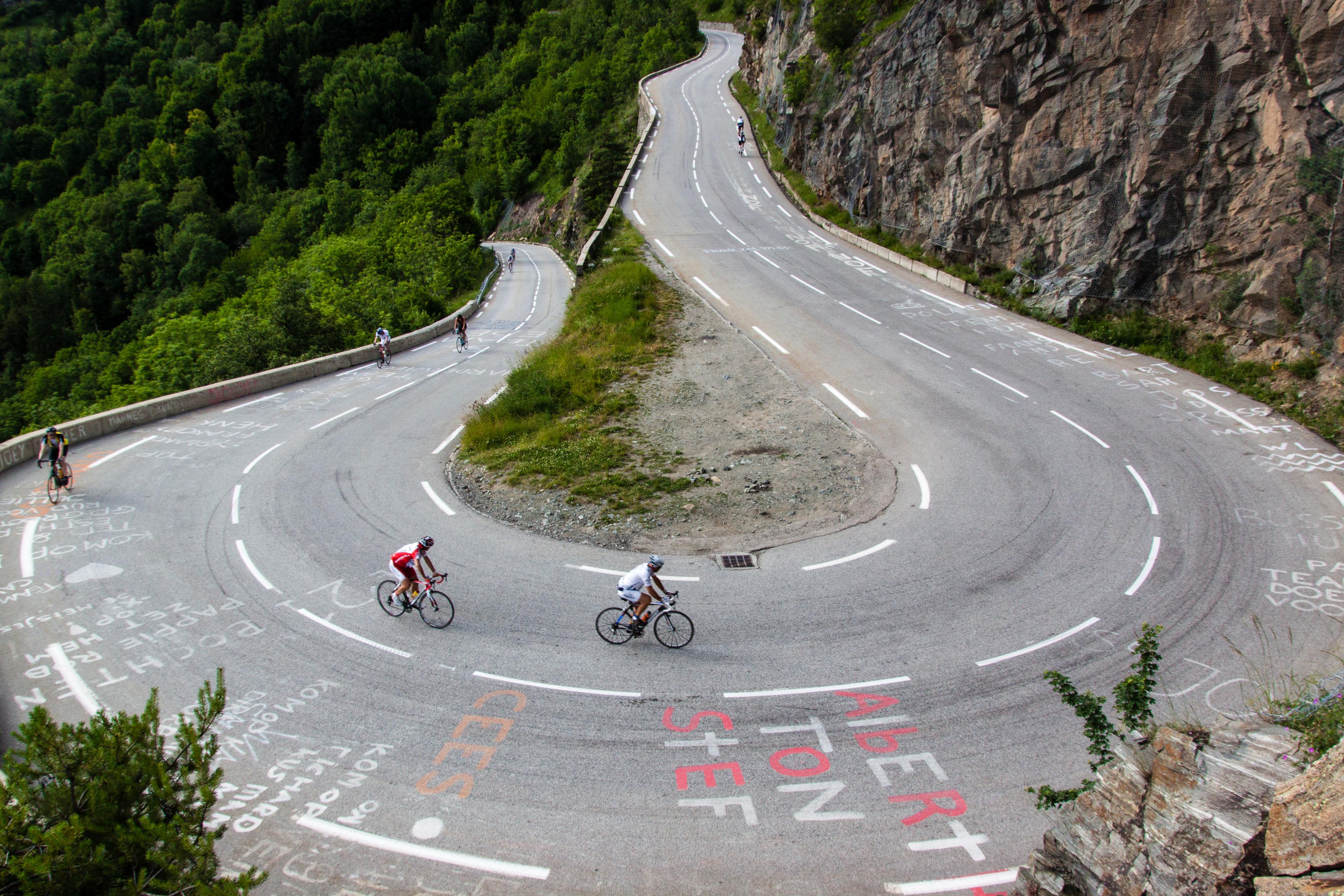

Twenty-one hairpins make Alpe d’Huez unusually easy to picture. From Bourg-d’Oisans, the road folds up the mountainside in numbered bends, the valley dropping further away with each turn. Counting the corners gives the effort a structure; the demanding opening makes clear how much work lies between them.
On Tour days, the bends become a crowded arena. In 2011, Pierre Rolland won the stage while Thomas Voeckler lost yellow. Triumph and disappointment occupied the same road within minutes of each other, watched by spectators close enough to see the cost in the riders’ faces.
The ascent ends at a resort rather than a remote pass. Buildings and finish-line history are part of its identity, just as much as the turns below. Away from the race, the numbered hairpins still provide their quiet countdown, each one bringing the valley into a slightly different perspective.
4. Col de Peyresourde
Saint Aventin, Midi-Pyrénées
Featured in 37 recorded Tour stages.


Peyresourde crosses between the Luchon side of the Pyrenees and the Louron valley. On the eastern ascent, the road rises towards open upper slopes, gathering the valley below into a widening view. It is a pass whose geography invites a journey onwards.
Chris Froome made full use of that continuation in 2016, attacking over the top and down the descent to win in Luchon and take yellow. The decisive move came as the climbing ended. Peyresourde’s place in that race was defined by what a rider chose to do beyond its summit.
The route here begins above Bagnères-de-Luchon, covering a shorter, steeper portion of the eastern approach than the full ride from town. It finishes at the col, distinct from the nearby finish at Peyragudes. The open final kilometres give the ascent its character before the road turns towards another valley.
3. Col du Galibier
Saint-Michel-de-Maurienne, Savoy
Featured in 40 recorded Tour stages.
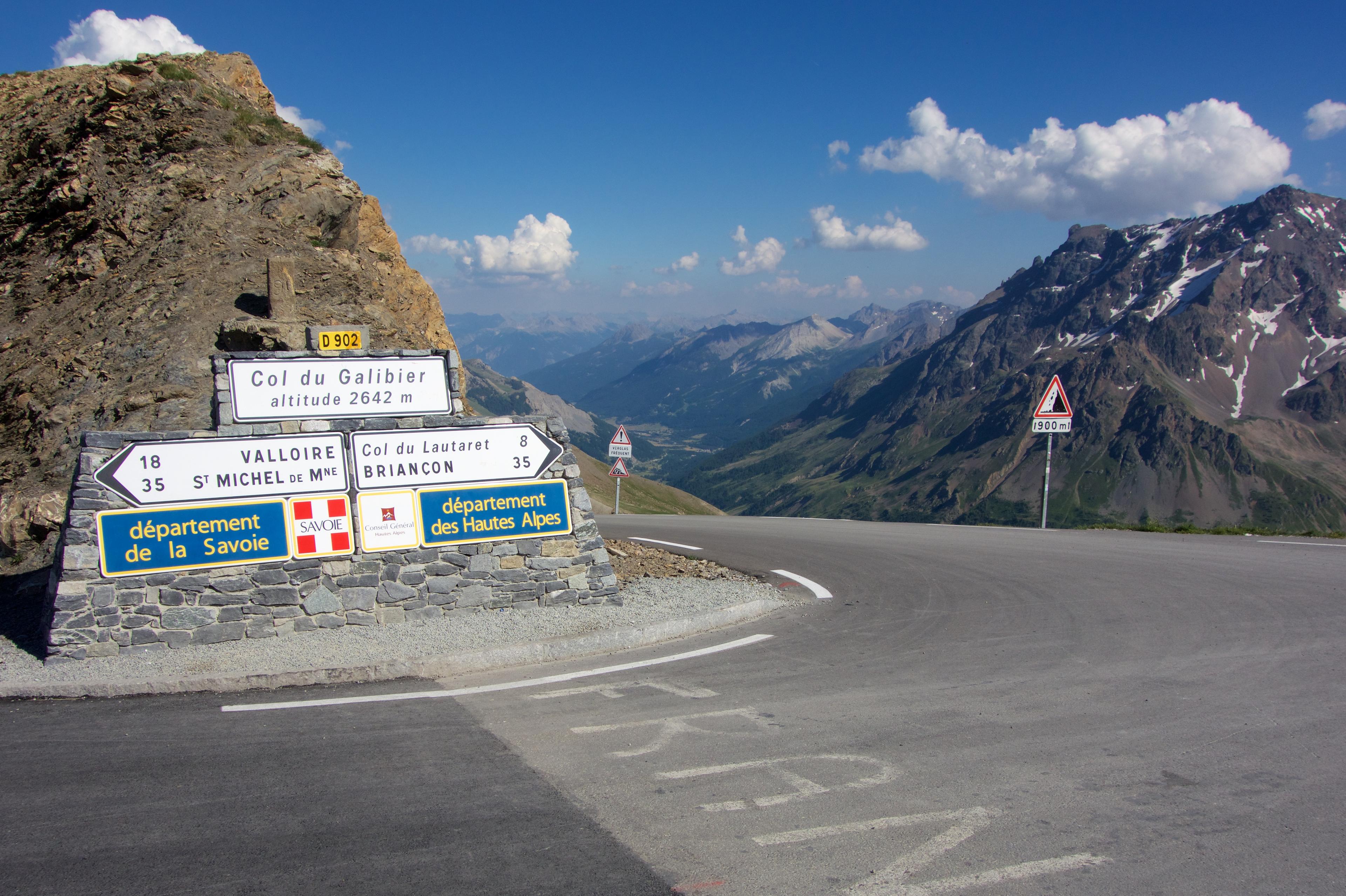
Galibier is a journey into the high Alps. From Saint-Michel-de-Maurienne, the northern route climbs Télégraphe, descends towards Valloire, then begins again. Forest, town and open mountainside arrive in succession, with the final road reaching above 2,600 metres.
The Tour first crossed the pass in 1911. A century later, Andy Schleck won a stage at its summit while Thomas Voeckler fought to keep yellow. The long approach and exposed finish gave space to both stories: an attack sustained across the mountains, a defence carried to the last metres.
The distance here includes Télégraphe and the descent to Valloire, so the average cannot describe a single uninterrupted ascent. Galibier asks for several efforts within one journey. Near the top, the sheltered roads of the Maurienne seem a long way behind; weather, altitude and the final gradient bring the scale of the crossing into sharp focus.
2. Col d’Aspin
Campan, France
Featured in 42 recorded Tour stages.
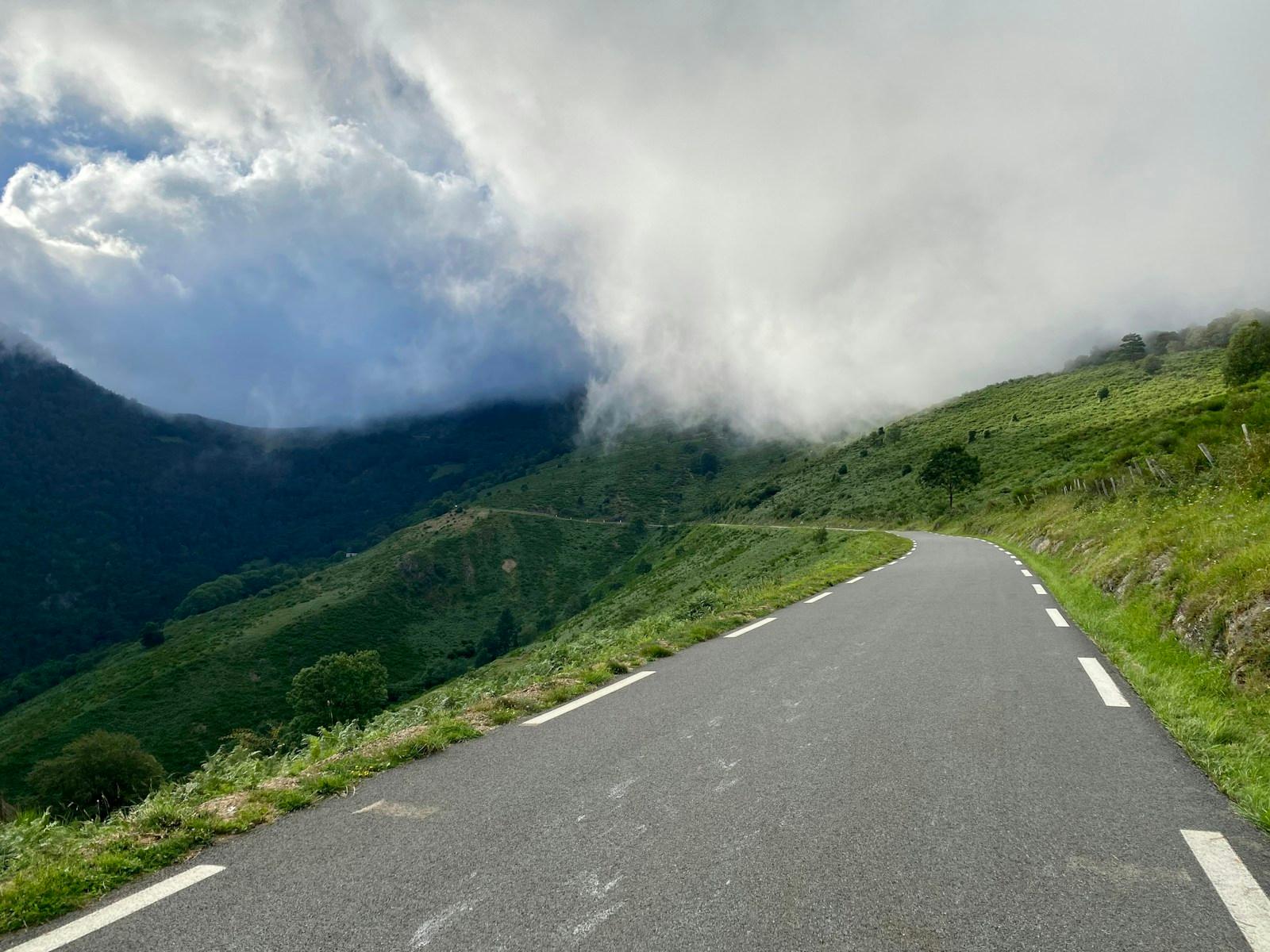
On the western approach to Aspin, the road passes through the pastoral country around Payolle before climbing into the trees. The easier valley kilometres make the change in gradient more apparent. At the summit, the woodland gives way to grass and a view across the Pyrenees.
Aspin often appears in the company of larger climbs. On the 2025 stage to Superbagnères, the Tour crossed Tourmalet, Aspin and Peyresourde before the final ascent. Each mountain added its own effort to a day whose outcome depended on the accumulation.
The route here starts at Sainte-Marie-de-Campan. Its gentler opening softens the average, while the wooded upper road supplies the sustained climbing. The summit has the simplicity of a crossing between valleys: a place to stop, look towards the surrounding peaks, then follow the road down towards Arreau.
1. Col du Tourmalet
Luz Saint Sauveur, Midi-Pyrénées
Featured in 69 recorded Tour stages.
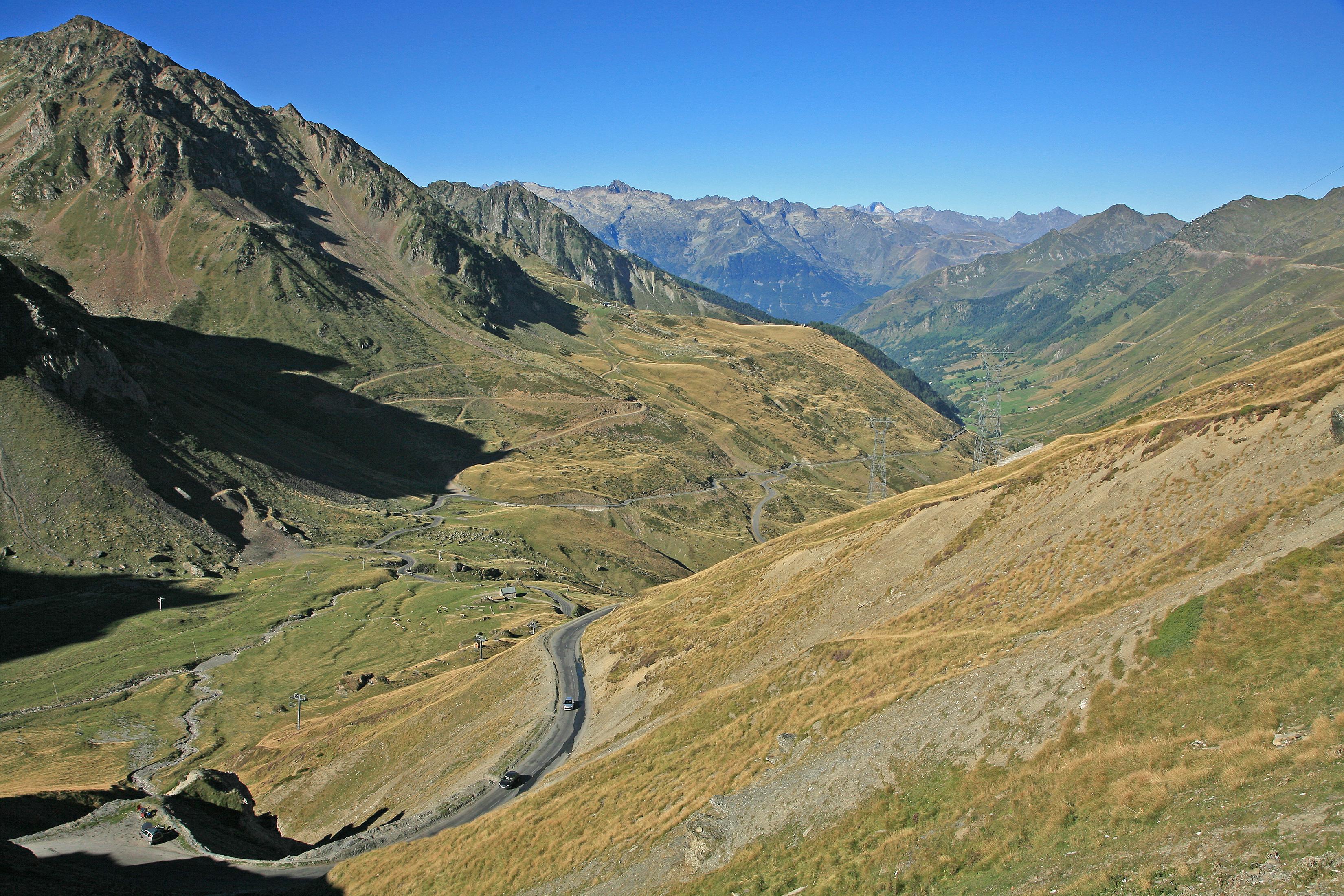
From Sainte-Marie-de-Campan, the eastern road to Tourmalet climbs towards La Mongie, then leaves the resort below as it reaches for the gap in the ridge. The ascent becomes more exposed with height. At the summit, 2,115 metres above sea level, the road passes between two very different views of the Pyrenees.
The Tour came here in 1910, during its first venture into the high mountains of the range. A century later, a summit finish marked the anniversary. Between those dates, and since, successive races have added their own attacks, recoveries and defeats to the same crossing.
Tourmalet’s place at the head of this countdown comes from that repeated return. The eastern ascent is long and sustained, with harder climbing beyond the gentler opening and little shelter at the top. Its familiarity survives the effort required to reach it: a name known before the ride, a road understood more closely afterwards.